How Simple Ankle Movements During TV Time Strengthen Balance and Reduce Fall Risk
Emily Rodriguez
05/19/2026
5 min read
Balance deteriorates gradually with age, often becoming noticeable only when you stumble or feel unsteady on stairs. Poor ankle mobility contributes significantly to this decline, as stiff, weak ankles reduce your ability to react quickly to changes in terrain or sudden movements. The encouraging news is that simple ankle exercises performed during your evening TV routine can dramatically improve your stability and confidence while walking.
Your ankles serve as the foundation for all standing and walking activities, constantly making micro-adjustments to keep you upright. When ankle joints become stiff or surrounding muscles weaken, your entire balance system becomes compromised. Regular ankle mobility work enhances proprioception, strengthens supportive muscles, and increases range of motion to help prevent dangerous falls.
Start With Basic Ankle Circles During Commercial Breaks
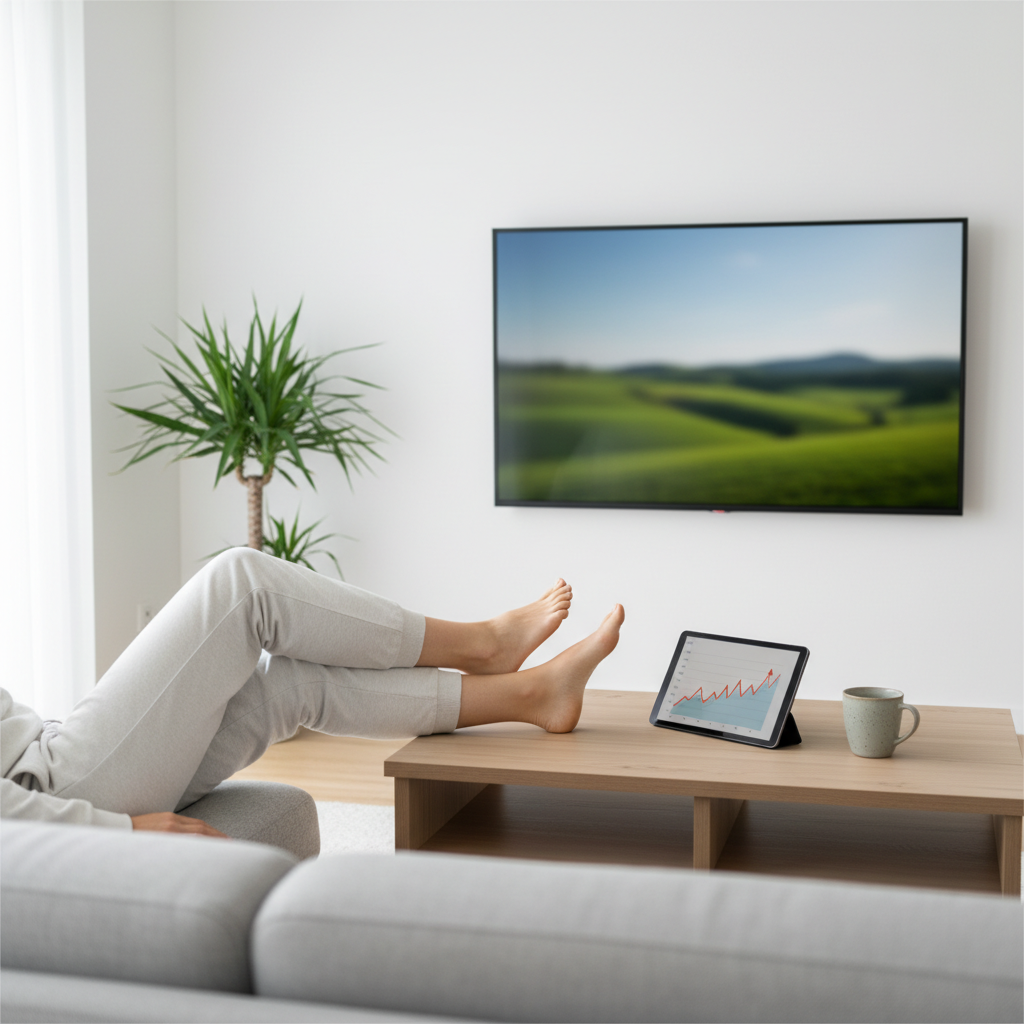
Begin each TV session with simple ankle rotations that wake up stiff joints and improve circulation. Sit comfortably in your chair and lift one foot slightly off the ground, then slowly rotate your ankle in large circles. Complete ten circles clockwise, then ten counterclockwise before switching feet. This gentle movement lubricates ankle joints, stretches tight tendons, and activates small stabilizing muscles that often become dormant during long periods of sitting. The beauty of this exercise lies in its simplicity and effectiveness as a foundation for more challenging movements.
Practice Alphabet Drawing for Enhanced Range of Motion
Use your big toe as an imaginary pencil to draw letters in the air, creating a fun exercise that improves ankle flexibility in all directions. Start with capital letters A through M during the first commercial break, then continue with N through Z during the next break. This exercise targets ankle dorsiflexion, plantarflexion, inversion, and eversion while keeping your mind engaged. The varied movements required to form different letters ensure your ankle joint moves through its complete range of motion, preventing stiffness and maintaining the flexibility necessary for navigating uneven surfaces safely.
Strengthen With Heel and Toe Raises
Perform calf raises and toe raises alternately during longer program segments to build the strength essential for stability. Start by pressing through your heels to lift your toes off the ground, holding for three seconds before lowering slowly. Then shift to lifting your heels while keeping toes planted, engaging your shin muscles for balanced strength development. Aim for fifteen repetitions of each movement, focusing on controlled motion rather than speed. These exercises strengthen the entire lower leg muscular system while improving the coordination between opposing muscle groups that work together to maintain balance.
Add Resistance With Towel Stretches
Keep a bath towel near your viewing area to add gentle resistance training that targets tight calf muscles and weak shin muscles. Loop the towel around the ball of one foot while holding both ends, then gently pull the towel toward you while flexing your foot upward. Hold this stretch for thirty seconds, feeling the pull along your calf muscle. Next, point your foot downward against the towel's resistance to strengthen your shin muscles. This combination of stretching and strengthening addresses the muscular imbalances that commonly develop with age and contribute to balance problems.
Challenge Stability With Single-Leg Stands
During dramatic scenes that don't require your full visual attention, practice standing on one foot while using your chair for light support. Begin by holding the position for ten seconds, gradually increasing duration as your balance improves. Focus on keeping your standing ankle active and responsive, making small adjustments to maintain stability. Switch legs every thirty seconds to ensure balanced development. This functional exercise directly translates to real-world balance challenges like stepping over obstacles or recovering from trips, building confidence in your body's ability to react appropriately.
Incorporate Ankle Pumps for Circulation
Perform rhythmic ankle flexing movements that pump blood through your lower legs while preventing the stiffness associated with prolonged sitting. Point your toes away from you, then flex them back toward your shins in a steady rhythm, completing twenty pumps every fifteen minutes. This exercise combats the circulation problems that contribute to ankle swelling and stiffness, particularly important for viewers who spend extended periods in recliners or sofas. Improved circulation enhances tissue health and maintains the flexibility necessary for quick balance reactions.
Practice Weight Shifts During Standing Scenes
Stand during exciting action sequences and practice shifting your weight from side to side and forward to backward, using your ankles to control the movement. Keep your feet planted while moving your center of gravity in different directions, feeling how your ankles adjust to maintain stability. This exercise mimics the weight shifts required during daily activities like reaching for items or turning to look behind you. The combination of entertainment and exercise makes this practice sustainable while building the dynamic balance skills needed for confident movement in various situations.
Build Coordination With Toe Tapping Patterns
Create rhythmic patterns by tapping your toes in sequences that challenge coordination while strengthening ankle dorsiflexors. Try alternating between right and left toe taps, then progress to more complex patterns like right-right-left or left-right-right-left. Maintain the pattern for thirty seconds before switching to a new sequence. This exercise improves the neuromuscular coordination essential for precise foot placement during walking, especially on stairs or uneven terrain. The cognitive component of remembering patterns also provides mental stimulation while your ankles gain strength and responsiveness.
Regular ankle mobility work during TV time creates a sustainable habit that fits seamlessly into your existing routine. These exercises require no special equipment, cause no disruption to your viewing pleasure, and deliver measurable improvements in balance and stability within weeks of consistent practice. Your future mobility and independence depend on the small actions you take today to maintain the foundation of confident movement.