How Appliance Bundle Pricing at Big Box Retailers Hides Per-Unit Overpayment and When Buying Separately Wins
Jennifer Walsh
07/22/2026
6 min read
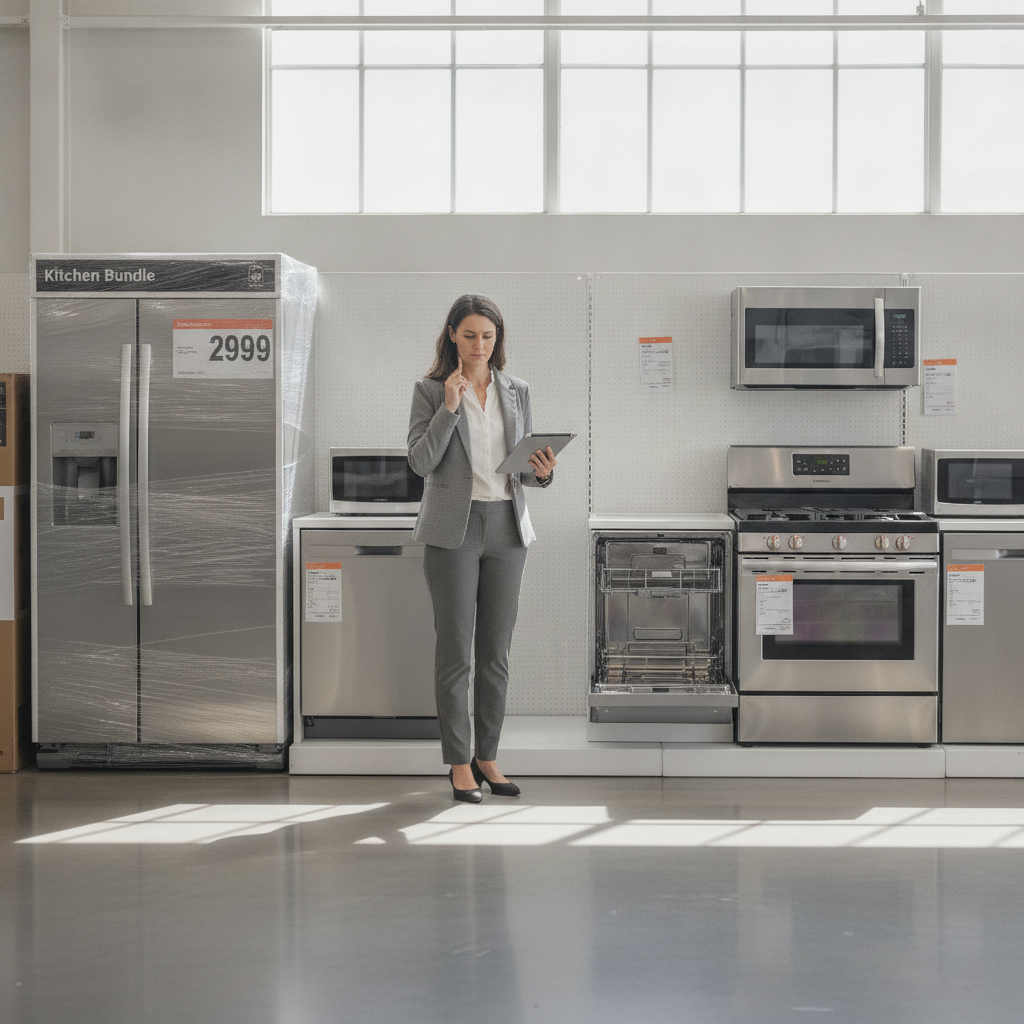
Buying a full kitchen suite feels like the smart move — one trip, one deal, everything matches. Big box retailers like Home Depot, Lowe's, and Best Buy have made bundling feel almost mandatory, dangling 10–15% off when you buy four appliances together. But the savings aren't always what they appear to be, and understanding how bundle pricing actually works can mean the difference between a genuine deal and an expensive convenience tax.
How Do Bundle Discounts Actually Get Calculated?
Retailers set bundle prices against their own listed retail prices — which are often inflated to begin with. When Home Depot advertises a four-piece Samsung kitchen suite at 15% off, that discount is measured against the sticker price of each unit, not against what any of those appliances could realistically sell for individually during a sale event. The refrigerator in the bundle might regularly go on sale for 20% off on its own during a holiday weekend, making the bundle "discount" on that single unit actually worse than waiting. Bundling locks you into the retailer's math, not your math.
When Does the Per-Unit Cost Quietly Climb?
One of the sneakier dynamics in bundle pricing is the anchor model. Retailers often build bundles around a flagship appliance — say, a French door refrigerator — and pair it with mid-tier versions of the dishwasher, range, and microwave that carry higher margins. The refrigerator price looks competitive because you compared it online. The other three? You probably didn't. If you were buying separately, you might have chosen a different dishwasher brand entirely — a Bosch over a generic house brand — at a lower price point with better reliability ratings. Bundling steers your choices toward what the store wants to move.
What Makes Individual Sales Events More Powerful?
Major appliance sales at Labor Day, Black Friday, and Presidents' Day routinely deliver deep discounts on individual units from every major brand. Shopping those events separately means you can cherry-pick the best deal on each appliance from different manufacturers, different retailers, and different sale windows. A GE refrigerator might be deeply discounted at Costco in October while a Whirlpool range hits a low point at Lowe's during a spring promotion. You can't do that when you're committed to a bundle. Buying separately over six to twelve months often nets better prices on every line item than any single bundle can match.
How Do You Know When a Bundle Is Genuinely Worth It?
Bundles make real financial sense in a few specific situations. If you need everything simultaneously — a new construction home, a complete kitchen gut renovation — and the delivery and installation coordination has meaningful value to you, bundling saves time and logistics headaches. It also works when all appliances in the bundle are brands and models you'd have chosen independently anyway. The test is simple: price each item separately at competing retailers using tools like Google Shopping or CamelCamelCamel for tracked price history on specific models. If the bundle total undercuts your best individual prices by more than the discount percentage implies, it's a real deal. If it doesn't, it isn't.
Which Appliances Make the Best Candidates for Separate Purchase?
Not all appliances carry the same discount patterns. Dishwashers and over-the-range microwaves go on deep sale constantly and are easy to buy separately without coordination stress. Refrigerators, the most expensive piece, reward patience — buying on a dedicated sale event rather than as a bundle add-on almost always wins. Ranges and cooktops have longer sale cycles, so timing matters more there. The appliance least worth buying in a bundle is whichever one you'd have researched most carefully on its own, because that's exactly where bundle pricing tends to hide the overpayment.
Does Brand Matching Actually Require a Bundle?
The visual appeal of a matched kitchen suite is real, but it's more achievable outside a bundle than most shoppers realize. Samsung, LG, and GE all maintain consistent finish families — stainless, black stainless, slate — across their full appliance lines, and those finishes stay available for years. Buying a GE refrigerator today and adding a GE range during next spring's sale event will result in a perfectly cohesive kitchen without paying bundle prices for the privilege. The matching kitchen is a design goal, not a shopping requirement.
How Should You Handle the In-Store Bundle Pitch?
Salespeople at big box retailers are trained to present bundles as limited-time, inventory-dependent offers. That urgency framing is usually not accurate. Bundle pricing structures at chains like Best Buy and Home Depot are relatively stable and reset around the same promotional calendar every year. When a salesperson suggests you'll lose the bundle discount if you wait, the honest answer is that a comparable or better bundle will return within a few weeks, and individual sale prices on the same models will almost certainly appear in the meantime. Taking a photo of the bundle breakdown and leaving to do 30 minutes of price comparison research is always the right call.
What Role Does Installation Convenience Play in the Math?
One legitimate bundle benefit that doesn't get enough credit is coordinated delivery and installation. Scheduling separate deliveries for four appliances across multiple retailers involves real time costs — days off work, multiple installation windows, different haul-away logistics. If you're in a time-constrained situation, that coordination value is worth assigning a real dollar amount in your comparison. For some buyers, paying a modest premium over individual sale prices is worth it to have everything handled in one visit. The key is being deliberate about that trade-off rather than assuming the bundle price is inherently better.
When Does Waiting Beat Both Options?
The most overlooked strategy is simply waiting for an open-box unit. Home Depot, Lowe's, and Best Buy all maintain open-box appliance sections — returned or floor-model units with full warranties intact — that often price individual appliances well below any bundle discount. Buying a returned Samsung dishwasher from the open-box section alongside a new LG refrigerator during a standalone sale often delivers better value than any packaged deal on the floor. Open-box pricing combined with a seasonal sale can stack into savings that no bundle comes close to matching.
Bundle pricing at big box retailers is designed to feel like the obvious choice, but the math only works in the retailer's favor when you don't check it. Pricing each appliance separately, timing purchases around major sale events, and staying open to open-box options gives you far more control over what you actually pay. The matched kitchen is still achievable — just on your terms, not theirs.