Armenia's Dilijan Region in May Offers Monastery Trails and Farmhouse Guesthouses Before Summer Hikers Discover Them
Robert Kim
08/18/2026
5 min read
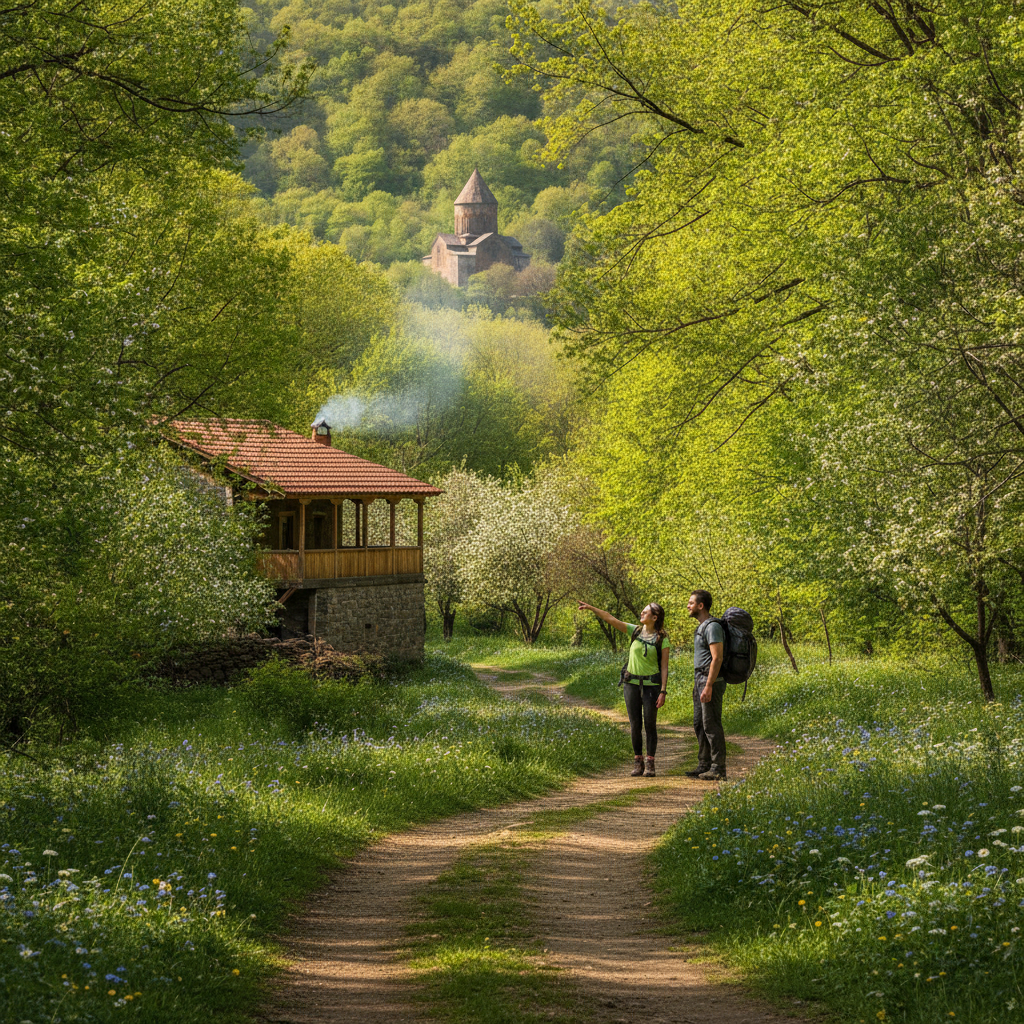
Some destinations reveal their best selves in the weeks just before the crowds arrive. Armenia's Dilijan region is one of them — a forested highland tucked into the Tavush province where medieval monasteries sit at the end of muddy spring trails, and where families have been converting their stone farmhouses into guesthouses quietly, without much fanfare. May is the month that locals still have mostly to themselves.
The Window Between Snow and High Season
Dilijan sits at elevations that keep winter lingering into April, which means May arrives as something of a gift. The forests — dense with oak, hornbeam, and wild cherry — emerge from dormancy in overlapping waves of green. Trails that were inaccessible or slick in March are firmed up and dry by the second week of May, but the summer hikers from Yerevan haven't yet scheduled their long weekends. This narrow window offers the unusual combination of full natural beauty and relative solitude. Temperatures in May typically hover in the comfortable mid-teens to low twenties Celsius during the day, making long walks through the Dilijan National Park not just possible but genuinely pleasant.
Monastery Trails Worth Planning Around
Haghartsin Monastery
Haghartsin is the anchor of any serious visit to the region. The complex, built between the tenth and thirteenth centuries, sits in a narrow valley surrounded by forest, and reaching it on foot rather than by road changes the experience entirely. The trail from the edge of Dilijan town winds through beech woodland before descending to the monastery's cluster of dark stone churches. In May, the canopy overhead is still thin enough to let light through, and the sound of the forest — birds returning from migration, water running through rocky channels — accompanies the walk. Arrive before noon on weekdays and the complex can feel entirely private.
Goshavank and the Lake Trail
A few kilometers east of Dilijan, Gosh village holds another monastery of similar age and craft. Goshavank is smaller than Haghartsin but arguably more intricate in its stonework, and the trail connecting it to Gosh Lake makes for a manageable half-day loop. The lake itself is modest — a calm surface ringed by mixed forest — but the combination of monastery, village, and water in a single walk is hard to beat for value of effort. In May, the wildflowers along the lakeshore are at their peak, and the mosquitoes that define July walks here haven't yet arrived.
Farmhouse Guesthouses as the Real Accommodation
Dilijan has a handful of boutique hotels, including the well-regarded Tufenkian Dilijan, but the more interesting choice in May is the network of family-run guesthouses that operate out of converted stone farmhouses in the villages surrounding the national park. These aren't listed on major booking platforms in any consistent way, and that's part of what makes them worth seeking out before the region's profile rises further.
Many of these guesthouses serve breakfast from their own gardens and livestock — flatbread, cheese, honey, and preserved fruit that reflect the season more accurately than any menu could. The hosts often know the trails better than any map, and a conversation over morning coffee can redirect an entire day's itinerary in useful ways. For finding these properties, Booking.com carries a small but growing selection, and Airbnb has added several hosts in the Dilijan area who list with genuine detail about what they offer. Cross-referencing both platforms with a direct search for guesthouses in surrounding villages like Haghardzin or Gosh yields options that don't appear in either database alone.
Getting to Dilijan Without Overcomplicating It
Yerevan is the natural starting point, and the drive to Dilijan runs roughly two hours along the M4 highway — a route that passes through the Sevan basin and offers its own views across Armenia's high-altitude lake before climbing into the Tavush forest zone. Renting a car is the most flexible approach, and the comparison platform Rentalcars consolidates options from local and international agencies in Yerevan with reasonable transparency on total costs including insurance.
For those who prefer not to drive, shared taxis — called marshrutkas — run from Yerevan's Kilikia bus station to Dilijan on a schedule that varies by day but is reliable enough for a May trip with some flexibility built in. The journey takes slightly longer than driving but costs very little and deposits passengers in the center of town.
What to Budget for a Long Weekend
May's pre-season timing works in a traveler's favor financially. Farmhouse guesthouses in the villages around Dilijan typically charge modest nightly rates that include breakfast, and midweek stays can be negotiated down further given the low occupancy at this time of year. Restaurants in Dilijan town are simple and inexpensive, with the local cuisine — grilled meats, bean soups, lavash, and fresh herbs — reflecting the agricultural character of the region rather than any attempt at tourist-facing menus.
For tracking daily spending without cell service disruptions, the app Trail Wallet works offline and makes it easy to log expenses in local currency on the go, which is useful in a region where ATM access outside Dilijan town is limited. Converting some cash in Yerevan before departure remains the practical move.
The Practical Case for Going Now
Dilijan's trajectory is upward. The government has invested in the town's infrastructure, a handful of international travel writers have begun including it in Caucasus itineraries, and word about the monastery trails has reached enough European hiking communities that late June and July are noticeably busier than they were a few years ago. May hasn't yet absorbed that attention, which means the trails are empty, the guesthouses are available, and the families running them still have time to sit and talk.
The best travel decisions are often about timing as much as destination. Dilijan in May is one of those cases where the window is real, the reward is proportionate to the effort, and the window is measurably narrowing. Starting with a single night in a farmhouse guesthouse outside Gosh village and a morning walk to Haghartsin is a low-commitment entry point — and for most visitors, it turns immediately into a reason to stay longer.