How Reading Blender Motor Wattage Against Blade Design Specifications Reveals Which Mid-Range Models Match Premium Performance at Half the Cost
Jennifer Walsh
09/20/2026
5 min read
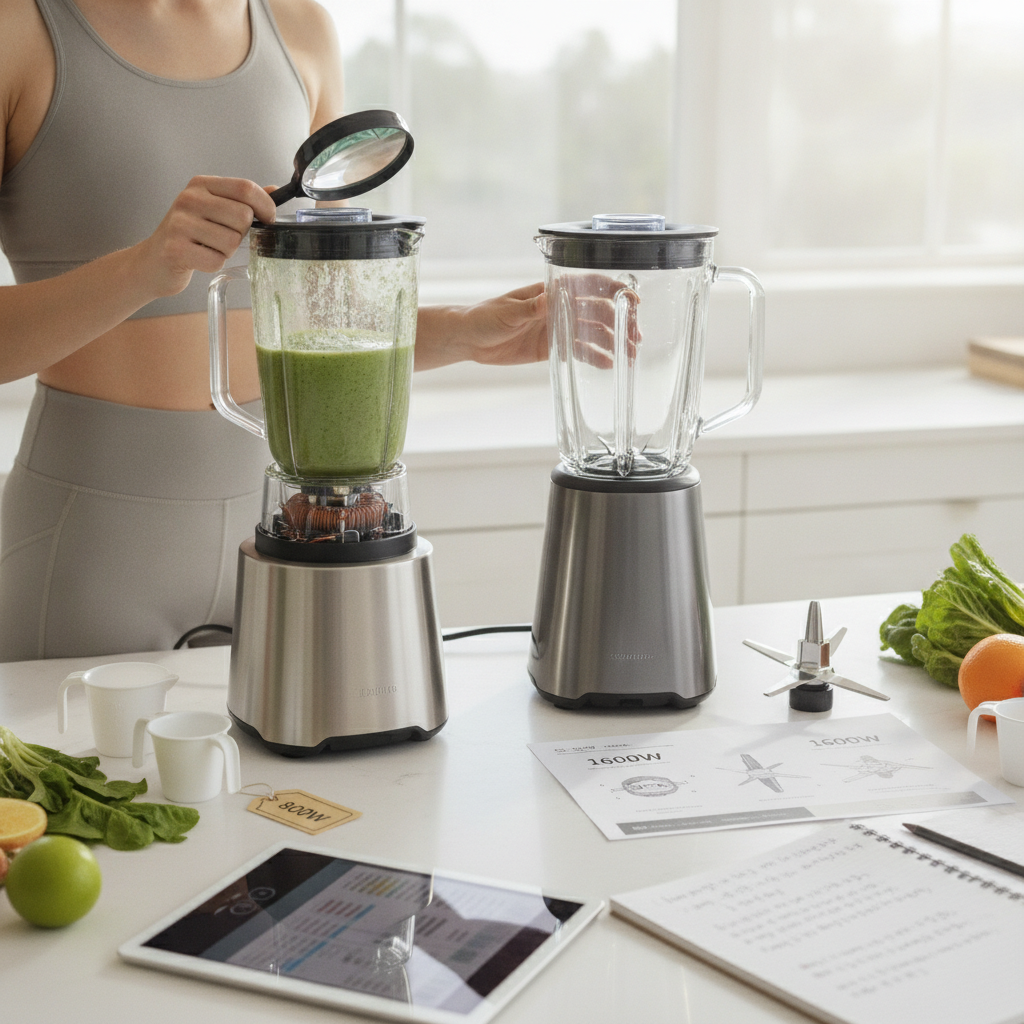
Motor wattage is the number blender brands lead with on packaging, but it tells only half the story. The other half lives in the blade assembly specs—and when you read both together, a clear pattern emerges: several mid-range models consistently punch well above their price point, delivering results nearly identical to blenders costing twice as much.
If you've been standing in a store aisle weighing a Vitamix against a Ninja or an Oster, you already know the sticker shock is real. But the gap between premium and mid-range blenders has narrowed considerably as blade engineering has improved. The key is knowing exactly what to compare, and where the specs that matter are hiding.
Why Wattage Alone Misleads Every Buyer
Wattage measures how much electrical power a motor draws, not how efficiently that power gets converted into blade torque. A 1,500-watt motor paired with a poorly designed blade assembly can underperform a well-engineered 900-watt system in real blending tasks. Marketing teams know this, which is why wattage gets printed in large font while blade geometry stays buried in the spec sheet. When you see a 1,200-watt blender at a mid-range price, the question isn't whether the wattage is high enough—it's whether the blade design can actually use that power effectively.
Understanding Blade Count and Pitch Angle Together
Blade count refers to how many individual cutting edges the assembly has, while pitch angle describes how steeply those blades are angled relative to the horizontal plane. A higher pitch angle creates more aggressive upward pull, which keeps ingredients cycling through the blending zone rather than settling at the bottom. Most premium blenders from Vitamix use a four-blade design with a steep pitch, typically around 35 to 45 degrees. Several mid-range models from Hamilton Beach and Ninja's mid-tier lines now match this geometry almost exactly, at a fraction of the cost. When both specs align with a premium benchmark, real-world performance differences become negligible for everyday tasks.
How Blade Material Affects Long-Term Value
Stainless steel blades vary significantly in thickness and tempering, even when the spec sheet simply says "stainless steel." Thicker blades hold an edge longer under repeated high-speed use, particularly when blending frozen fruit, ice, or fibrous greens. Look for blade thickness listed in millimeters in the product spec sheet—values above 1.5mm typically indicate commercial-grade stock. Blendtec uses this heavily in its marketing because its blades are unusually thick for a consumer product. Some mid-range competitors, including certain Cleanblend models, now use comparable blade stock, which means durability becomes a genuine tie rather than a premium advantage.
The Coupling Design That Makes or Breaks Motor Efficiency
The coupling is the connector between the motor shaft and the blade assembly, and it's one of the least-discussed but most consequential specs on any blender. A loose or plastic coupling introduces wobble at high RPM, which reduces cutting efficiency and eventually wears down both the blade and the motor bearing. Premium blenders almost universally use metal-on-metal coupling with tight tolerances. When reading mid-range specs, look for mentions of "all-metal drive coupling" or "hardened coupling sleeve"—these phrases signal that engineers paid attention to the connection point. Several mid-range models in the Cleanblend and Omniblend lines now include metal couplings that match Vitamix's standard closely enough that the functional difference disappears.
RPM vs Torque: Reading the Right Performance Number
RPM and torque are related but distinct measures of motor performance. High RPM without sufficient torque causes the blade to slow dramatically under load—exactly what happens when you add dense ingredients like nut butters or frozen banana. Torque is rarely printed directly on consumer blender packaging, but you can estimate it by dividing wattage by no-load RPM. A blender drawing 1,000 watts at 22,000 RPM under no load produces meaningfully more torque than one drawing the same wattage at 30,000 RPM. This calculation reveals why some high-RPM budget blenders stall under load while more modest mid-range units with better torque curves handle the same task without hesitation.
How Jar Design Amplifies or Wastes Blade Performance
The blade assembly doesn't work in isolation—it works in partnership with the jar shape around it. Narrower jar bases force ingredients toward the blade faster and more consistently, which is why Vitamix's narrow-bottomed containers outperform wide-base designs even at lower speeds. When comparing mid-range models, look for jar width at the base relative to blade diameter. A blade that spans 80 percent or more of the jar's base diameter will create a more efficient vortex than one that spans 60 percent, regardless of wattage. Several mid-range options from Ninja's professional series have adopted this narrow-base geometry, effectively borrowing what premium brands perfected years ago.
Where to Find the Specifications That Actually Matter
Manufacturer product pages don't always surface every spec worth reading, but a few reliable sources do. The FTC-required spec sheets filed for Energy Star-rated appliances often include motor efficiency data not found in retail listings. Third-party review platforms like Rtings and the Wirecutter's long-term testing archives publish blade pitch and coupling type data gathered from physical disassembly. Searching a specific model number alongside "full specifications" on the manufacturer's support page frequently surfaces a downloadable PDF with engineering details that retail listings omit. Spending fifteen minutes with these sources before buying a blender in the eighty to one-hundred-fifty dollar range can easily save you two hundred dollars on a premium model that offers no meaningful performance edge.
The blender market rewards buyers who look past the headline wattage number and spend a few minutes with the underlying specs. When blade pitch, coupling quality, blade thickness, and jar geometry all align with what premium brands offer, mid-range models stop being compromises and start being genuinely smart purchases. The performance gap is real at the extremes—commercial kitchen blenders and budget ten-dollar countertop units are worlds apart—but in the practical mid-range sweet spot where most households shop, the specs tell a different story than the price tags do.