How Reading Cordless Tool Battery Platform Compatibility Across Brands Reveals Which Starter Kit Saves the Most Over Five Years
Jennifer Walsh
09/16/2026
5 min read
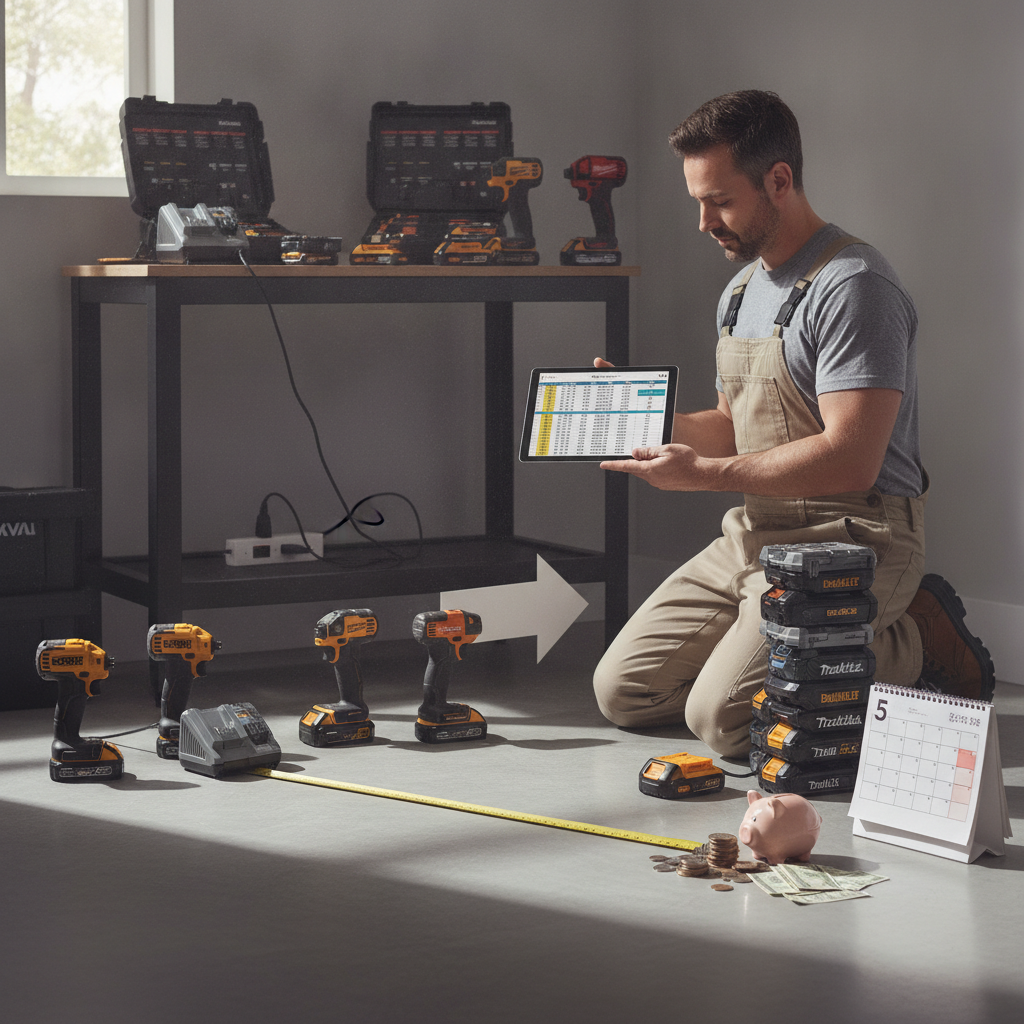
Buying your first cordless tool kit feels straightforward until you realize the drill you just bought locks you into a battery ecosystem that could cost you hundreds of dollars over the next several years. Battery platforms are the quiet architecture behind every cordless tool purchase, and most buyers never think about them until they're standing in the aisle buying their third tool and wondering why none of their batteries are interchangeable.
The good news is that reading platform compatibility carefully before you buy your first tool — not your fifth — is one of the smartest financial moves you can make in the tool category. Here's how to do it.
Start by Mapping the Tools You'll Actually Need
Before you compare a single battery spec, get honest about what you'll realistically use over five years. Most homeowners need a drill/driver, a circular saw, and maybe a reciprocating saw or jigsaw. Contractors and serious DIYers might add an impact driver, an oscillating tool, or a random-orbit sander. The point is: your projected tool list determines which platform delivers the most value, because a brand with 300 tools in its ecosystem means nothing if you only ever need six of them. Write your list down before you shop.
Learn How Battery Voltage and Ah Ratings Translate to Real Cost
Every major brand — DeWalt, Milwaukee, Makita, Ryobi — builds its platform around specific voltage families. DeWalt's 20V MAX and FLEXVOLT lines, Milwaukee's M18 and M12, and Ryobi's ONE+ system all use proprietary battery shapes and electronics. A 4.0Ah battery from one brand will not fit another brand's tool, full stop. What this means financially is that every new brand you introduce to your garage requires a fresh battery investment. A quality 5.0Ah battery typically runs between forty and ninety dollars depending on brand and capacity, so fragmenting across two or three platforms adds up fast.
Compare Starter Kit Battery Count Before Comparing Tool Features
One of the most overlooked tricks in tool shopping is comparing what batteries actually come in each starter kit. A Milwaukee M18 combo kit at a big-box retailer might include two 2.0Ah batteries, while a comparable Ryobi ONE+ bundle includes two 4.0Ah batteries at a lower price. The Ryobi kit delivers more runtime out of the box, which delays the moment you'll need to buy additional batteries. When you're calculating five-year cost, factor in how many batteries you'll realistically need to run a full workday without stopping to charge.
Read Platform Breadth as a Hedge Against Future Purchases
Platform breadth — the number of tools a brand offers in a single battery family — is your protection against paying for batteries twice. Ryobi's ONE+ platform is one of the broadest available at the consumer level, covering everything from power tools to outdoor equipment to shop vacuums. Milwaukee's M18 platform skews toward professional-grade tools but offers extraordinary depth for contractors. If you anticipate eventually adding a leaf blower, a shop light, or a pressure washer, buying into a platform that covers those categories means your existing batteries pull double duty. That compatibility can save you the cost of a second battery purchase entirely.
Check Retailer Exclusivity Before You Commit to a Brand
Some platforms are sold exclusively or primarily through specific retailers, which limits your ability to comparison shop. Ryobi is largely a Home Depot exclusive, while DeWalt and Milwaukee are sold more broadly. This matters because retailer-exclusive tools don't go on sale as aggressively across multiple competing stores. If you're a deal hunter, a platform sold at multiple retailers — including Amazon, Lowe's, and local hardware stores — gives you more opportunities to buy additional tools and batteries at promotional pricing over five years. That flexibility compounds into real savings.
Factor In Bare Tool Availability for Growing Your Kit Cheaply
Once you're committed to a platform, the cheapest way to expand is buying bare tools — tools sold without batteries or chargers — because you already own compatible power sources. The spread between a bare tool and a kit version of the same tool is often thirty to sixty dollars. Over five years, if you add four or five tools to your garage, that difference adds up to a meaningful amount. DeWalt and Milwaukee both offer extensive bare tool catalogs, and checking that availability before you choose a starter platform is worth your time.
Use Price Tracking to Time Your First Kit Purchase
Starter kits drop significantly during holidays, spring renovation season, and back-to-school sales at hardware chains. Tools like CamelCamelCamel track Amazon pricing history, and it's easy to see that a Milwaukee or DeWalt combo kit fluctuates by fifty to a hundred dollars across the calendar year. Buying your starter kit during a promotional window — rather than when you suddenly need it — can offset the cost of one or two additional batteries right from the start. Patience at the entry point pays dividends across every subsequent purchase in that ecosystem.
Choosing a battery platform is less like buying a tool and more like choosing a long-term financial relationship. The brands with the broadest ecosystems, the widest retail availability, and the most generous bare-tool catalogs consistently deliver the lowest total cost of ownership across five years. Spend thirty minutes mapping your tool needs and comparing platform depth before you buy anything, and that single decision will outperform any coupon or one-day sale you'll ever find.