How Daily Posture Patterns Shape Your Spinal Health and Energy Levels Over Time
Emily Rodriguez
04/29/2026
5 min read
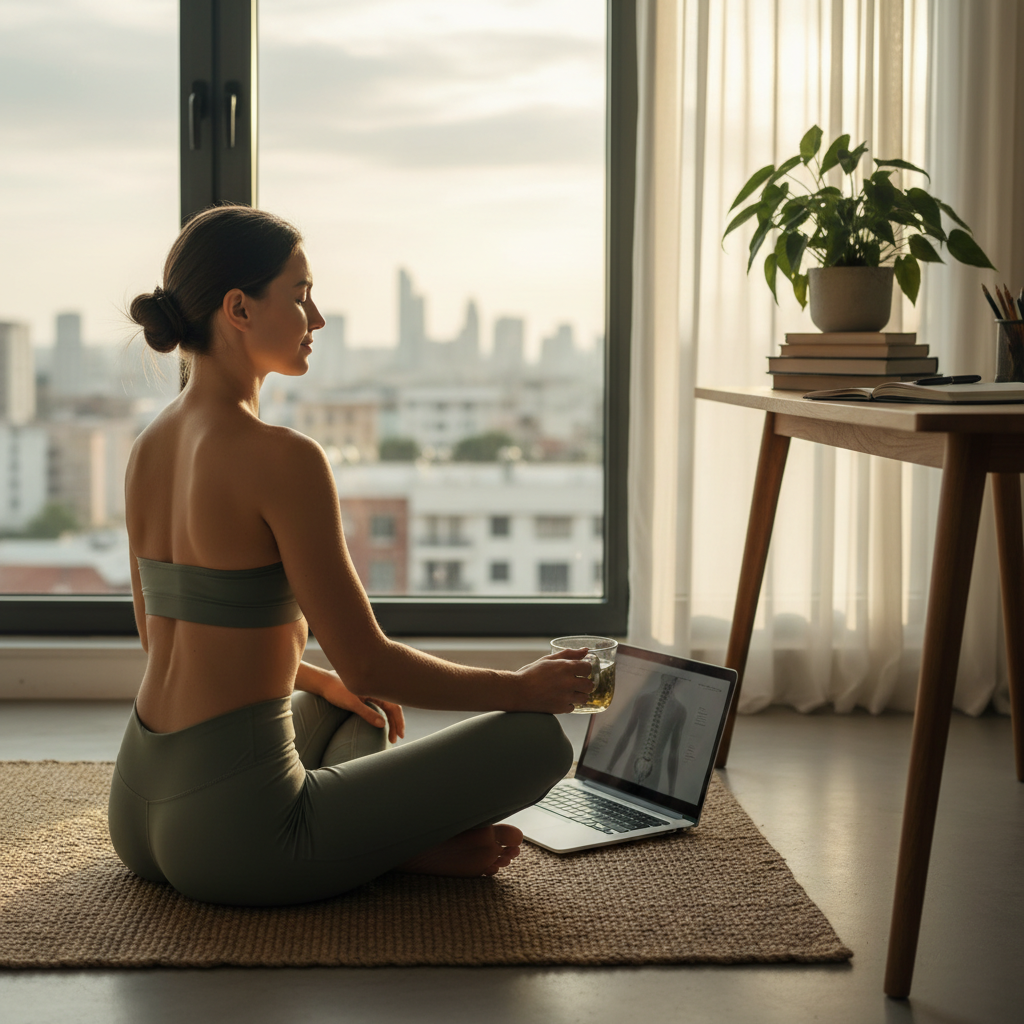
The way you hold your body during everyday activities gradually reshapes your spine, muscles, and energy patterns in ways that become more pronounced with each passing year. Most people notice the immediate discomfort of poor posture but miss how these daily positions compound into long-term structural changes that affect everything from breathing efficiency to afternoon fatigue.
Your spine adapts to whatever position you spend the most time in, creating muscle imbalances and joint restrictions that eventually feel normal. Understanding how specific activities alter your posture helps you make small adjustments that prevent these cumulative effects from limiting your mobility and vitality as you age.
Recognize How Desk Work Changes Your Spine Alignment
Sitting at a computer for hours creates a characteristic forward head posture that strains your cervical spine and compresses the thoracic vertebrae. This position shortens the muscles in your chest and front of your neck while weakening the muscles between your shoulder blades. Over months and years, this imbalance becomes structural, making it difficult to stand tall even when you're away from your desk. The compressed thoracic spine also reduces your lung capacity, contributing to shallow breathing patterns that limit oxygen delivery and increase fatigue throughout the day.
Monitor Your Head Position During Phone and Device Use
Looking down at smartphones and tablets places enormous stress on your cervical spine, with the weight of your head increasing exponentially as you tilt it forward. Holding your phone at ear level during calls and raising tablets to eye level prevents the neck strain that leads to tension headaches and upper back pain. Text neck, as this condition is commonly called, creates muscle tension that restricts blood flow to your brain and upper extremities. Making these simple adjustments to device positioning protects the natural curve of your neck and maintains proper circulation to support sustained mental energy.
Adjust Your Sleep Position to Support Spinal Recovery
Your sleeping posture affects spinal alignment for six to eight hours every night, making it crucial for either supporting or undermining your daytime postural improvements. Sleeping on your stomach forces your neck into extreme rotation and flattens the natural curve of your lower back, while sleeping on your side without proper pillow support can create lateral spinal curves. Side sleeping with a pillow between your knees and adequate neck support allows your spine to maintain its natural curves throughout the night. Back sleeping with a pillow under your knees reduces pressure on your lower back and allows the muscles around your spine to fully relax and recover from daily stress.
Pay Attention to Your Standing and Walking Posture
Many people develop compensatory posture patterns while standing that shift weight to one leg or lock their knees, creating uneven wear on joints and muscles over time. Standing with your weight evenly distributed over both feet and maintaining a slight bend in your knees engages the muscles that support proper spinal alignment. Walking with your head over your shoulders rather than thrust forward improves balance and reduces the energy cost of locomotion. Apps like PostureScreen Mobile can help you assess your standing alignment, while practicing walking meditation encourages awareness of your movement patterns throughout the day.
Examine How Carrying Items Affects Your Body Mechanics
The way you carry bags, groceries, and other items throughout the day creates asymmetrical loading patterns that pull your spine out of alignment and strain supporting muscles. Carrying a heavy bag on one shoulder forces your spine to curve laterally to counterbalance the weight, while wearing a backpack too low on your back increases forward head posture. Using a backpack with padded straps positioned close to your body distributes weight evenly across your strongest muscles. Alternating sides when carrying single-strap bags and using wheeled luggage whenever possible prevents the muscle imbalances that contribute to chronic pain and reduced energy efficiency in daily movement.
Consider How Household Activities Impact Your Spine
Cooking, cleaning, and other daily tasks often involve prolonged bending, reaching, and twisting that can stress your spine when performed with poor body mechanics. Standing at kitchen counters that are too low forces you to round your back, while reaching into high cabinets with arms overhead compresses your lower back. Adjusting counter height with anti-fatigue mats and using step stools instead of reaching overhead protects your spinal curves during extended kitchen work. Vacuuming and mopping with tools that have adjustable handles allows you to maintain upright posture, while taking frequent breaks to stretch and change positions prevents muscle fatigue that leads to compensatory movement patterns.
Track Your Driving Position for Long-Term Spinal Health
Driving positions that place your seat too far from the pedals or at an improper angle create sustained stress on your lower back and can contribute to disc problems over time. Your knees should be slightly higher than your hips, with your back fully supported against the seat and your arms only slightly bent to reach the steering wheel. Companies like Volvo and Mercedes-Benz have invested heavily in ergonomic seat design, offering models with adjustable lumbar support and seat depth. Regular drivers benefit from lumbar support cushions and taking breaks every hour to walk and stretch, preventing the muscle stiffness and joint compression that accumulate during long periods behind the wheel.
Create Movement Breaks That Reset Your Posture
Building regular movement breaks into your day helps counteract the postural stress of prolonged static positions and maintains the mobility necessary for healthy spinal function. Simple exercises like doorway chest stretches, shoulder blade squeezes, and gentle neck rotations performed every hour can prevent muscle tension from accumulating into painful restrictions. The Pomodoro Technique, traditionally used for productivity, works well for postural health when you use each break to perform specific movements that counteract your most common postural stresses. Setting phone reminders or using apps like Stretchly ensures you take these breaks consistently, allowing your muscles to reset before fatigue leads to poor positioning.
Maintaining awareness of how daily activities affect your posture becomes easier with practice and leads to significant improvements in both immediate comfort and long-term spinal health. The cumulative effects of better postural habits show up as increased energy, reduced pain, and greater ease of movement that supports an active lifestyle for decades to come.