How 1099-NEC Income Timing Across Calendar Years Affects Quarterly Tax Payments and Cash Flow Management
Sarah Mitchell
04/11/2026
5 min read
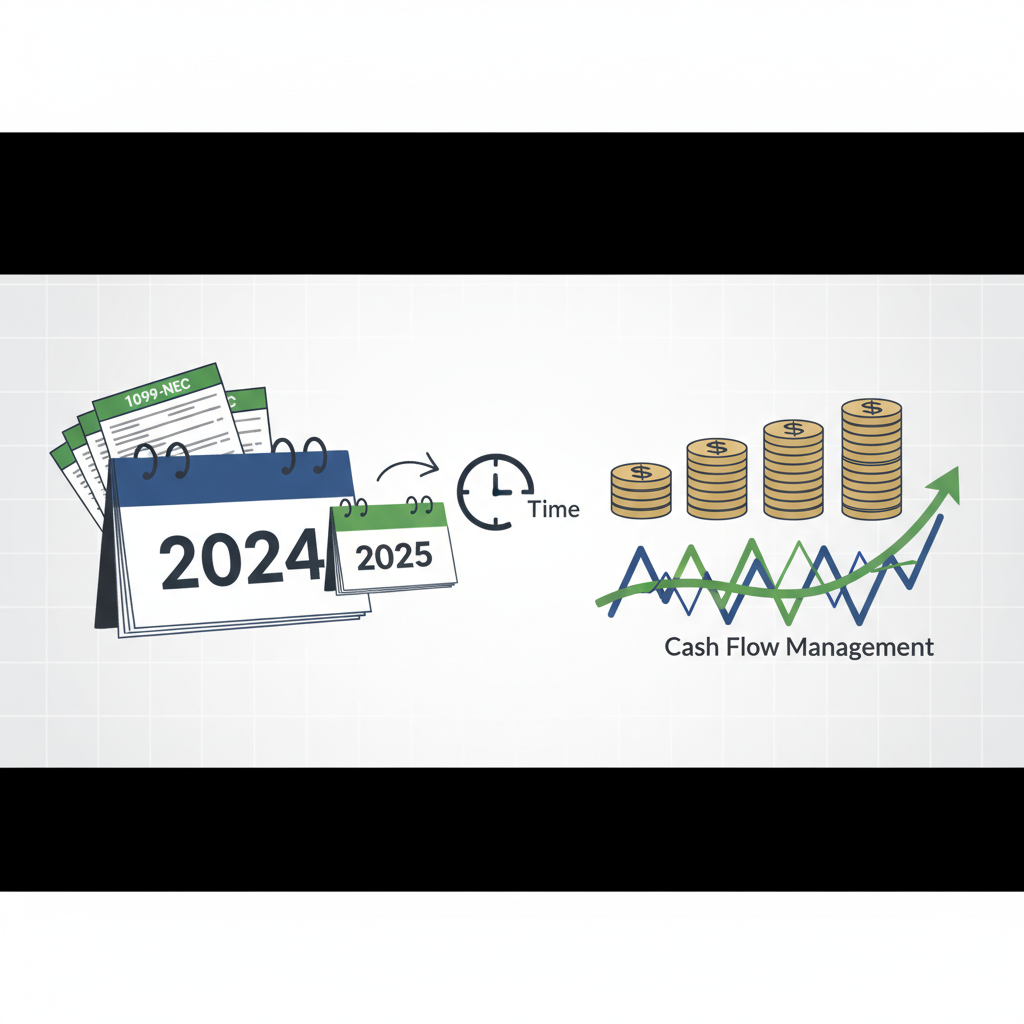
Independent contractors and freelancers face a unique financial challenge that W-2 employees never encounter: income that arrives unpredictably across calendar years while tax obligations remain rigidly tied to quarterly deadlines. A client's decision to pay an invoice in December versus January can shift thousands of dollars in tax liability from one year to the next, creating cash flow complications that ripple through your entire financial plan.
The complexity intensifies when project completion dates don't align with payment schedules, leaving you to navigate estimated tax payments based on income projections that may prove wildly inaccurate. Understanding how to manage this timing mismatch becomes essential for maintaining financial stability throughout your freelance career.
Track Invoice Dates Separately from Payment Dates
Maintaining detailed records of when you submit invoices versus when clients actually pay helps you predict cash flow patterns and identify clients with consistently delayed payment schedules. Create a simple spreadsheet tracking invoice date, client name, amount, payment terms, and actual payment date. This data reveals which clients typically pay within 30 days versus those who stretch payments to 60 or 90 days. Companies like FreshBooks and QuickBooks Self-Employed offer automated tracking that highlights overdue payments and payment trends. Understanding these patterns allows you to adjust your estimated tax payments based on realistic cash flow projections rather than optimistic invoice submission dates.
Calculate Estimated Taxes Using Conservative Income Projections
Base your quarterly estimated tax payments on the most pessimistic realistic scenario for payment timing, ensuring you never face underpayment penalties even if clients delay payments into the following year. Review your outstanding invoices each quarter and assume that payments due in the final month of the quarter may actually arrive in the first month of the next quarter. This conservative approach prevents the cash crunch that occurs when you've calculated taxes based on expected December payments that don't materialize until January. The IRS safe harbor rule requiring 100% of last year's tax liability (110% for higher earners) provides a useful minimum baseline when income timing becomes unpredictable.
Build Payment Timing Into Contract Terms
Negotiate specific payment schedules in your contracts that account for your tax payment obligations, particularly for large projects that span multiple quarters. Include penalty clauses for payments delayed beyond 30 days, and consider requiring partial payments upon project milestones rather than waiting for completion. For significant year-end projects, specify that final payments must be received by December 15th to ensure proper tax year allocation. Payment processing companies like Stripe and PayPal typically transfer funds within 2-3 business days, but ACH transfers through traditional banks can take 5-7 business days. Factor these processing delays into your contract terms to avoid unexpected tax year shifts.
Maintain a Tax Payment Reserve Account
Establish a dedicated savings account that receives a fixed percentage of every payment, regardless of timing, to smooth out the cash flow disruptions caused by irregular income patterns. Transfer 25-30% of each payment immediately into this account, treating it as untouchable except for quarterly tax payments and year-end tax obligations. High-yield savings accounts from online banks like Marcus by Goldman Sachs or Ally Bank ensure this money earns interest while remaining accessible for tax deadlines. This systematic approach prevents the scramble to gather tax payment funds when multiple large payments arrive in the same quarter or when expected payments shift to the following year.
Time Large Expense Purchases Strategically
Coordinate significant business expense purchases with your income timing to maximize tax benefits and maintain cash flow stability throughout the year. When a large payment arrives unexpectedly in December, immediately evaluate whether you can legitimately accelerate planned equipment purchases or professional development expenses into the current tax year. Conversely, if expected year-end income shifts to January, consider delaying non-essential business purchases to the following year when you'll have better cash flow coverage. Office equipment, software subscriptions, and professional development courses offer flexibility in timing while providing legitimate business tax deductions.
Monitor Quarterly Income Distribution Patterns
Analyze your income distribution across quarters over multiple years to identify seasonal patterns that can inform your tax planning and cash flow management strategies. Many freelancers experience higher income in Q4 as businesses rush to complete projects before year-end, while others see slower periods during summer months when decision-makers take vacations. Document these patterns in a simple chart showing quarterly income totals for the past three years. This historical data helps you anticipate cash flow needs and adjust estimated tax payments accordingly. Some industries, like retail marketing, show predictable spikes around holiday campaigns, while B2B consulting may follow corporate budget cycles.
Leverage Same-Year IRA Contributions for Tax Management
Maximize traditional IRA contributions by April 15th to reduce tax liability when unexpected late-year income creates a higher-than-anticipated tax burden. The contribution deadline falling after the calendar year provides flexibility when client payments shift your income distribution unexpectedly. For 2026, the IRA contribution limit allows significant tax reduction potential, particularly valuable when a large December payment pushes you into a higher tax bracket. Solo 401(k) plans offer even higher contribution limits for freelancers with substantial income fluctuations. Coordinate these contributions with your overall retirement strategy rather than using them solely for tax management.
Plan for Multi-Year Income Smoothing Opportunities
Consider income smoothing strategies when you have control over project completion timing, particularly for large contracts that could reasonably be completed in December or January. While you cannot artificially manipulate income recognition for tax purposes, legitimate project scheduling decisions can help balance income across years. Some freelancers negotiate contracts with built-in flexibility for delivery dates, allowing strategic timing based on their overall tax situation. Additionally, establishing business entities like S-Corps or LLCs can provide additional tools for managing income timing and tax obligations across calendar years.
The intersection of unpredictable income timing and rigid tax deadlines requires systematic planning rather than reactive scrambling. Freelancers who develop robust tracking systems and conservative cash flow projections create financial stability that allows them to focus on growing their business rather than constantly worrying about tax obligations.