How Reading Tire Date Codes and Load Ratings at Auto Parts Retailers Reveals Which Budget Brands Match Premium Safety Standards
Jennifer Walsh
08/03/2026
6 min read
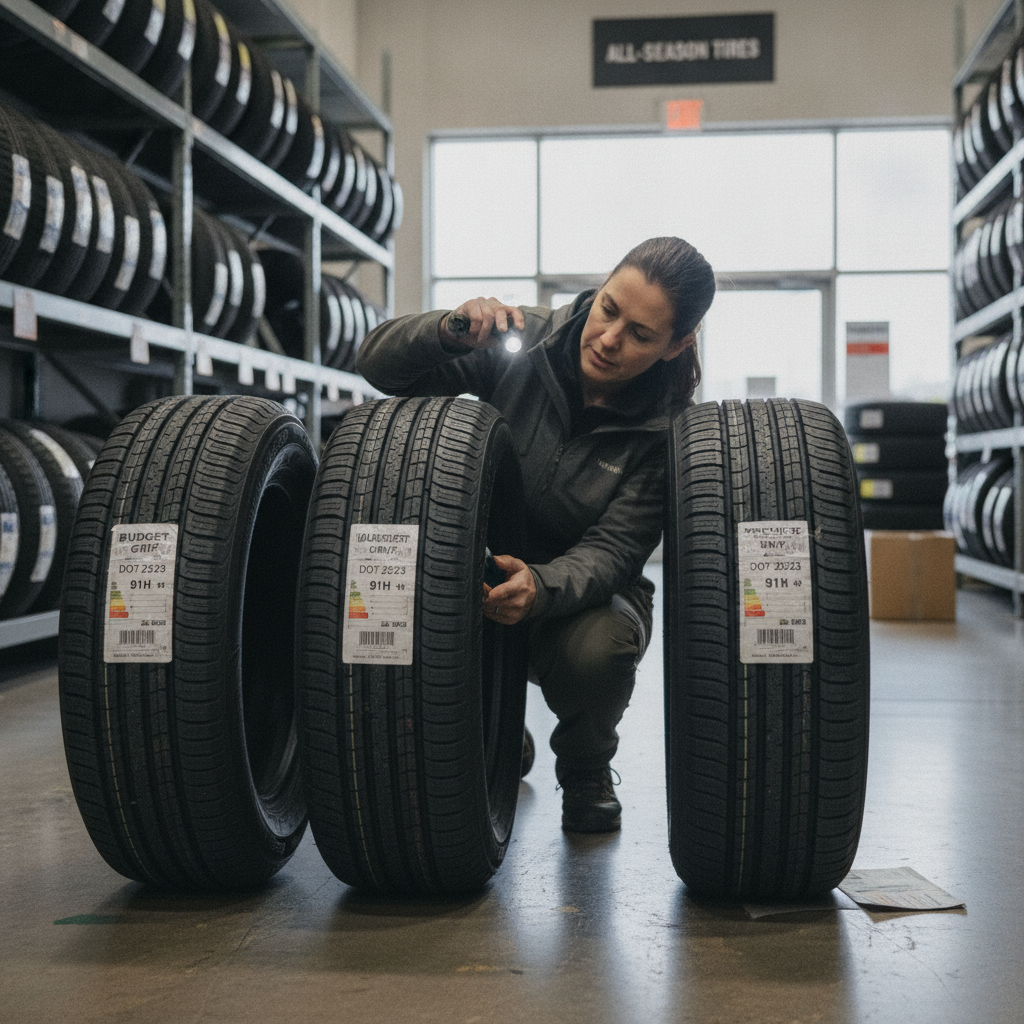
Tires are one of those purchases where the sticker price tells you almost nothing about actual value. Two sets can look identical on the shelf — same size, similar tread pattern, wildly different prices — and yet the cheaper option might genuinely perform just as well in wet conditions and last just as long. The trick is learning to read what the tire itself is telling you, because manufacturers encode a surprising amount of useful information right into the sidewall. Once you know what to look for at stores like Discount Tire, AutoZone, or Costco, budget brands stop being a gamble and start being a legit strategy.
Find the DOT Code Before You Touch the Price Tag
Every tire sold in the U.S. carries a DOT (Department of Transportation) code stamped into the sidewall, and the last four digits reveal the manufacture date. The first two digits are the week, the last two are the year — so "2324" means the tire was made in the 23rd week of 2024. Tires degrade chemically even when sitting unused, so anything older than three to four years deserves a second look regardless of brand. A premium tire sitting on a warehouse shelf for five years is a worse buy than a budget tire made six months ago. Check this number every single time.
Understand Load Index Numbers and Why They Matter
The load index is a number stamped on the sidewall — typically somewhere between 70 and 120 for passenger vehicles — that corresponds to the maximum weight each tire can support. Your vehicle's owner manual or the sticker inside your driver's door jamb specifies the minimum load index you need. Budget brands like Mastercraft or Nexen often meet or exceed that minimum just as reliably as Michelin or Bridgestone. The number is the number. If a $90 tire carries the same load index as a $180 tire for your specific vehicle, the structural safety requirement is met. Start comparing from there, not from the brand name.
Match the Speed Rating to Your Actual Driving Habits
Right next to the load index on the sidewall, you'll find a letter indicating the tire's speed rating — essentially the maximum sustained speed the tire is designed to handle safely. Most everyday drivers operating below highway speeds need nothing above an H or V rating. Budget brands routinely produce tires with S, T, H, and V ratings that satisfy standard passenger vehicle requirements. Paying more for a W or Y rating when your commute tops out at 70 mph is money that doesn't improve your safety. Match the rating to your needs, not to the ceiling of what's available.
Compare UTQG Treadwear Grades Side by Side
The Uniform Tire Quality Grade (UTQG) system stamps three ratings onto every tire: treadwear, traction, and temperature resistance. Treadwear is expressed as a number — 400, 500, 600 — where higher means longer projected lifespan. Traction grades run AA, A, B, C, with AA representing the best wet-braking performance. Temperature grades go A, B, C, reflecting how well the tire manages heat buildup at speed. At a store like Pep Boys or Walmart Auto, you can stand in the aisle and compare these numbers across price points. A budget tire with a 500 treadwear and AA traction grade is, by the industry's own standardized measure, outperforming a premium tire rated 400 treadwear and A traction.
Look for TPMS Compatibility Indicators on the Packaging
Most vehicles built after 2008 use a Tire Pressure Monitoring System, and not all budget tires are equally compatible with every TPMS sensor configuration. Reputable budget brands clearly indicate TPMS compatibility on their packaging or in the retailer's product description. At Discount Tire or Costco's tire center, staff can cross-reference your vehicle's make and model quickly, but it helps to ask directly rather than assume. An incompatible tire won't trigger a warning light just from being installed — the problem usually surfaces later, and the fix adds cost. Confirming compatibility upfront takes thirty seconds and prevents a frustrating return trip.
Use Retailer Apps to Pull Third-Party Testing Scores
Before committing to any tire, pull up third-party testing resources on your phone while you're still standing in the store. Consumer Reports and Tire Rack both publish objective test data ranking tires across categories like dry braking, wet handling, and road noise. Brands like General Tire and Kumho consistently score well in independent tests despite sitting well below Michelin and Continental on the price tag. When a budget tire scores within a few points of a premium option in the categories that actually affect daily driving, the price gap becomes very hard to justify. Real-world test data is the most powerful filter you have.
Check Whether the Tire Carries an OEM or OE Marking
Tires marked OEM (Original Equipment Manufacturer) or OE were approved by an automaker to be installed on a specific vehicle model at the factory. Several budget-friendly brands hold OE designations for major manufacturers — meaning the same tire that ships on a base model vehicle of a major brand also shows up in the aftermarket at a lower price point than perceived premium alternatives. Spotting an OE marking on a budget tire effectively tells you the manufacturer's engineering team already approved it for your vehicle class. That's not a small endorsement. It strips away a lot of the uncertainty that comes with buying an unfamiliar name.
Ask About Installation Bundle Pricing Before You Commit
The tire itself is only part of the total purchase. Installation, balancing, valve stems, and disposal fees vary significantly between retailers, and a lower sticker price can quietly disappear once those add-ons stack up. Costco's tire installation pricing tends to be bundled and transparent. Discount Tire often runs promotions that include free rotation and rebalancing for the life of the tire. Comparing total installed cost — not just the per-tire price — is what actually determines your savings. A $100 tire with $80 in fees may cost more than a $130 tire with fees included. Run the full number before you decide.
The sidewall of every tire is essentially a small technical document, and reading it correctly changes how you shop. Date codes, load indexes, speed ratings, and UTQG grades are standardized across every brand — budget or premium — which means the comparison process is more objective than most people realize. Brands like General Tire, Kumho, and Mastercraft routinely meet the same measurable standards as tires that cost twice as much. Once you know what to look for, the tire aisle stops being intimidating and starts being an opportunity to keep more money in your pocket without giving anything up.