How Reading Vacuum Cleaner Suction Specifications Against Floor Type Reveals Which Budget Models Match Premium Performance
Jennifer Walsh
08/19/2026
5 min read
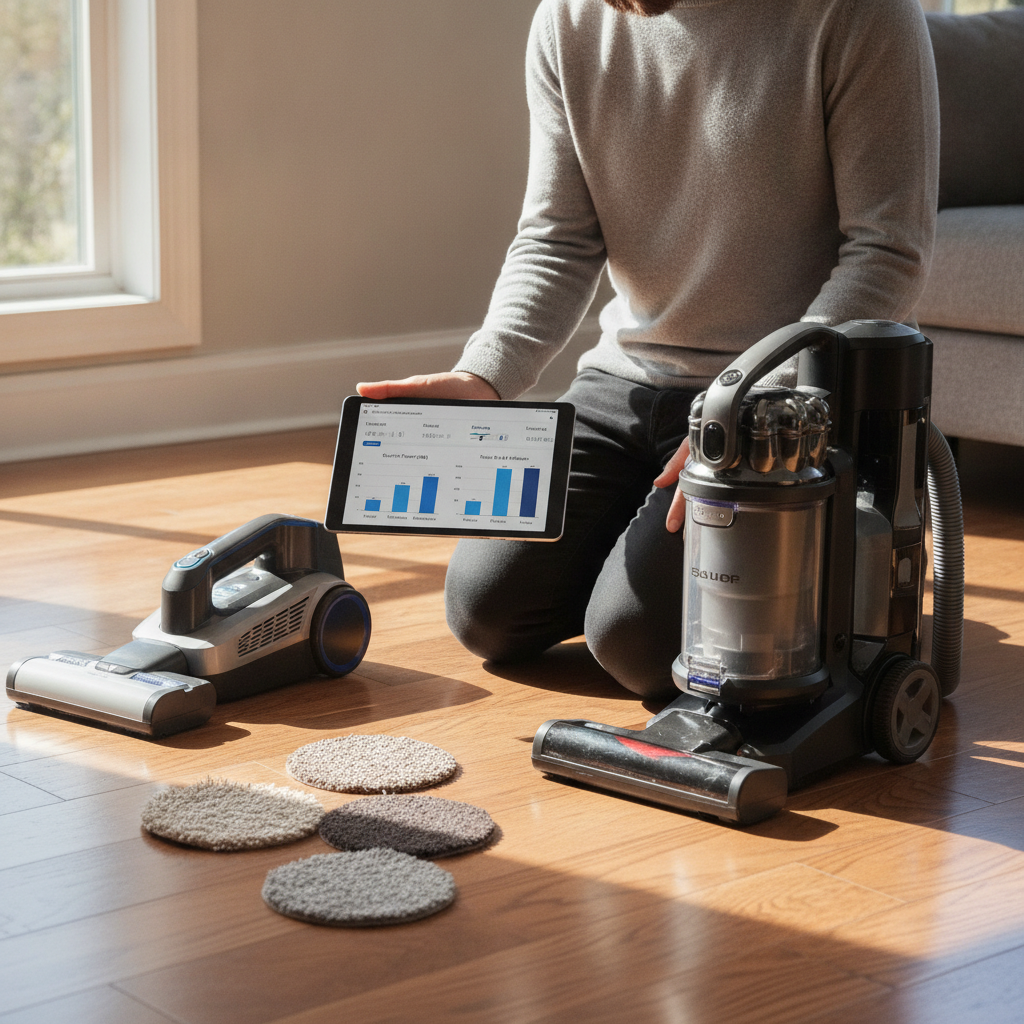
Vacuum cleaners are one of those purchases where marketing tends to outrun reality by a wide margin. Walk into any Best Buy or Target, and you'll see price tags ranging from under fifty dollars to well over five hundred, often with remarkably similar claims about suction power and deep cleaning. The good news is that the specifications manufacturers publish — when you know how to read them against your actual floor types — make it genuinely possible to find a budget model that cleans as well as something three times its price.
What Do Suction Specifications Actually Measure?
Most vacuum boxes list performance in one of three ways: air watts, pascal (Pa) measurements, or plain wattage. Motor wattage is the least useful number because it measures power consumed, not suction delivered — a high-watt motor can still produce weak airflow if the design is inefficient. Air watts and pascals are far more meaningful. Air watts measure the combination of suction and airflow together, while Pa ratings describe suction pressure at the nozzle. For context, a robot vacuum like the Roborock S8 advertises around 6,000 Pa, which sounds impressive but means very little unless you pair it with the floor type it's cleaning.
How Does Hard Floor Performance Differ From Carpet?
Hard floors — tile, hardwood, luxury vinyl — actually require lower suction than most people assume. On smooth surfaces, excessive suction can cause the vacuum head to seal against the floor and drag, reducing cleaning efficiency and scuffing delicate finishes. For hard floors, a model producing 80 to 100 air watts with a soft-roller brush head performs exceptionally well. This is why a Bissell CrossWave or a budget Shark hard-floor model often cleans genuinely better than a premium Dyson on tile — the design matches the surface rather than simply overwhelming it with power.
Why Does Carpet Pile Height Change the Equation?
Low-pile carpet, like commercial-grade or berber styles, behaves closer to hard floors in terms of suction requirements — moderate air watts with good brush roll agitation handles it easily. Deep-pile and plush carpet is where suction numbers start to matter more directly. Thick fibers trap debris below the surface, and you need both strong suction and a motorized brush roll spinning fast enough to lift those fibers. Here, looking for models that list 150-plus air watts with a high brush-roll RPM spec separates genuine deep-carpet cleaners from those that only look capable on the box.
Which Spec Combination Signals a True Budget Winner?
The sweet spot for a budget vacuum that matches premium cleaning performance is a combination of three specs: air watts at or above 100, a sealed-suction rating (meaning suction measured at a fully blocked port rather than open air), and a motorized brush roll rather than a passive one. Models from Kenmore and Eureka regularly hit these benchmarks at under a hundred dollars. Comparing these numbers directly against a Miele or Dyson upright often reveals that the gap in actual cleaning performance on standard carpet is far smaller than the price gap suggests.
How Does Filtration Interact With Suction Over Time?
A vacuum's suction spec is only as good as its filtration system allows it to remain. Poor filtration lets fine dust partially clog the motor pathway, gradually degrading suction across the life of the unit. Models with HEPA-rated or multi-stage filtration maintain their rated air watts much longer between cleanings. When comparing budget options, look for washable filters rather than disposable ones — a Shark Navigator with a washable HEPA filter will hold its suction performance far longer than a similarly priced model requiring frequent filter replacements that quietly erode both performance and your wallet.
Does Corded vs Cordless Change How You Read the Numbers?
Cordless vacuums introduce one important variable that changes how you should interpret suction specs: battery-draw curves. Many cordless models, including premium options from Dyson and Tineco, publish their suction figures at full battery charge. Performance drops as the battery depletes, sometimes significantly within the first ten minutes of use. When shopping cordless, prioritize models that publish suction specs at partial charge, or look for user reviews specifically commenting on late-session performance. For large homes with multiple floor types, a corded model often delivers more consistent real-world performance per dollar than a cordless unit at the same spec on the box.
How Can You Test Spec Claims Without Buying First?
Return policies are your best research tool here. Major retailers like Costco and Amazon allow returns on most vacuums within a reasonable window, which means you can run a genuine floor test at home and measure performance against the claims. Before buying, write down the air watt and Pa ratings from the box, then vacuum the same section of carpet or floor twice — once with the unit in question and once with whatever you currently own. If debris collection is equivalent, the specs held up. This method consistently reveals that mid-range models from Shark or Eureka perform on par with units costing significantly more on many common floor types.
What Hidden Specs Reveal Build Quality Beyond Suction?
Beyond suction numbers, a few secondary specifications reveal whether a budget vacuum will last long enough to justify the purchase. Brush roll material matters — nylon bristles handle mixed debris better than rubber on carpet, while rubber or soft-woven rollers outperform nylon on hard floors. Motor warranty length is another quiet indicator: manufacturers offering two-year or longer motor warranties on budget units are signaling confidence in that component's longevity. Cord length and hose diameter also affect real-world usability, since a short cord or narrow hose forces compromises that no suction rating can overcome.
Reading vacuum specifications through the lens of your specific floor types transforms what feels like a guessing game into a straightforward comparison. The premium price on brands like Dyson reflects engineering refinements, brand equity, and design — all worthwhile things — but they don't automatically translate into better cleaning on the floors most people actually own. Match the air watt range and filtration spec to your surface, check the brush roll type, and the budget options that genuinely compete become obvious fast.