How Foot Strike Patterns During Walking Affect Joint Alignment and Simple Gait Adjustments That Reduce Knee Pain Within 30 Days
Emily Rodriguez
06/12/2026
5 min read
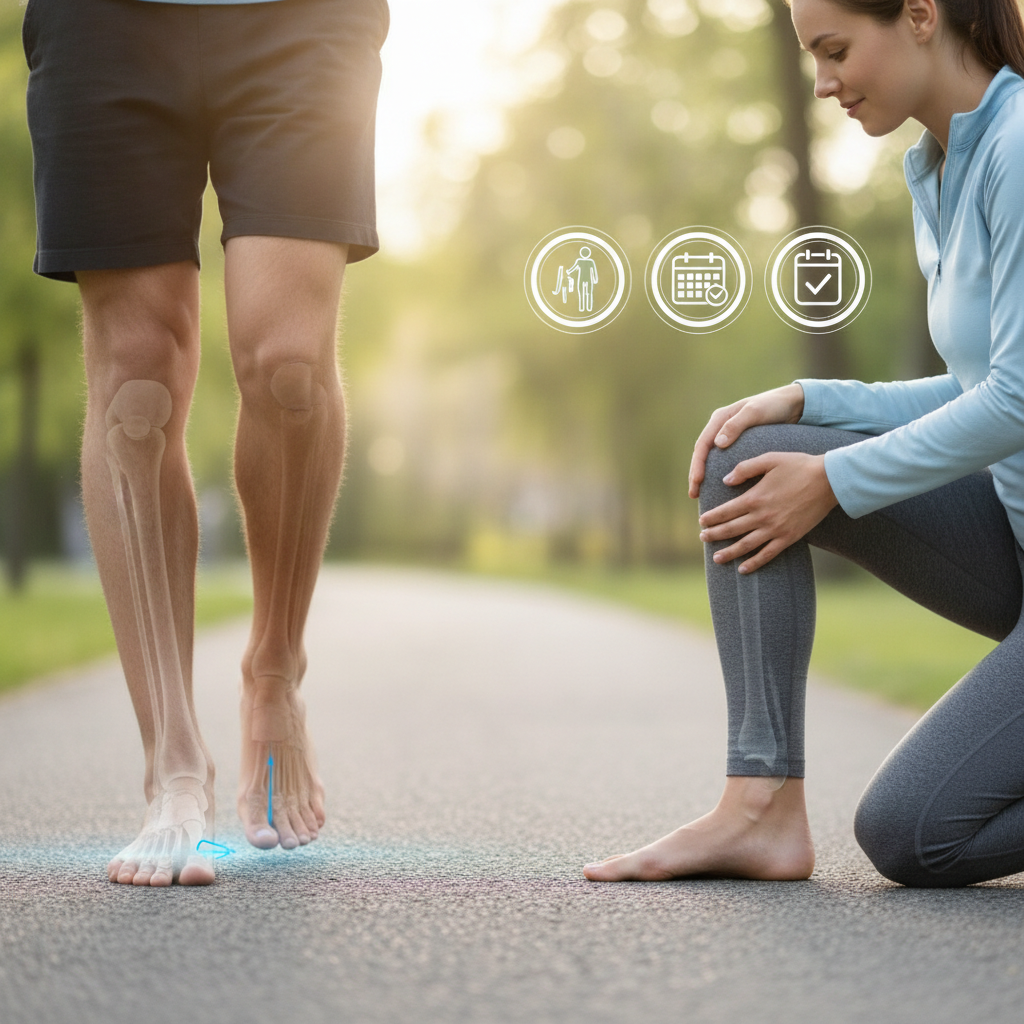
Walking should be effortless, but millions of people experience knee discomfort from poor foot strike patterns that misalign their joints with every step. The way your foot contacts the ground creates a chain reaction up through your ankle, knee, and hip that either supports or undermines your body's natural mechanics.
Your gait pattern develops over decades through habit, injury compensation, and footwear choices that gradually shift your walking mechanics away from optimal alignment. Modern lifestyle factors like prolonged sitting, elevated heel shoes, and reduced ground texture variety contribute to walking patterns that stress your knees unnecessarily. Understanding how your foot strike affects joint alignment provides the foundation for simple adjustments that can reduce knee pain within weeks.
Start by Observing Your Natural Foot Strike Pattern
Record yourself walking from the side using your smartphone to identify whether you're a heel striker, midfoot striker, or forefoot striker. Most people heel strike, landing on the back of their foot first, which sends impact forces directly up through their knee joint. Pay attention to the sound your feet make when walking on hard surfaces – loud, slapping sounds typically indicate heavy heel striking that creates excessive force transmission. Notice whether your foot rolls inward (overpronation) or outward (supination) after initial contact, as these patterns affect knee tracking throughout your stride.
Transition Gradually Toward Midfoot Landing
Shift your foot strike from heel-first contact toward landing on the middle of your foot, which naturally engages your arch and calf muscles as shock absorbers. Practice this transition for short distances initially – perhaps 5-10 minutes daily – to allow your lower leg muscles time to adapt to the increased workload. Focus on landing with your foot beneath your center of gravity rather than far ahead of your body, which reduces the braking force that stresses your knee joint. Companies like ALTRA and Merrell design shoes with zero-drop soles that facilitate this transition by keeping your heel and forefoot at the same height.
Reduce Your Step Length and Increase Cadence
Take shorter, quicker steps rather than long strides that force your leg to reach far ahead of your body and create a jarring heel strike. Aim for a cadence of 170-180 steps per minute, which naturally encourages a more efficient midfoot landing pattern while reducing impact forces on your knees. Use a metronome app like Soundbrenner or simply count your steps for 15 seconds and multiply by four to measure your current cadence. Shorter steps keep your foot landing closer to your center of gravity, which allows your muscles to absorb impact more effectively than when your leg extends far forward. This adjustment often provides noticeable knee relief within the first week of consistent practice.
Strengthen Your Foot and Ankle Muscles Daily
Perform calf raises, toe spreads, and single-leg balance exercises to build the intrinsic foot strength necessary for proper shock absorption during walking. Strong feet and ankles provide the stable foundation your body needs to maintain proper alignment up through your knees and hips. Practice picking up marbles or towels with your toes, walking barefoot on varied surfaces, and performing ankle circles to restore mobility and strength. Dedicate 10-15 minutes each morning to these exercises, as foot and ankle weakness forces other joints to compensate in ways that often stress the knees. Brands like TRX offer suspension trainers that make single-leg strengthening exercises more accessible for building the stability your gait requires.
Choose Footwear That Supports Natural Movement
Select shoes with minimal heel elevation, adequate toe box width, and flexible soles that allow your foot to bend naturally during push-off. Traditional running shoes with thick, cushioned heels often encourage heel striking and can weaken your foot muscles over time by doing the work your feet should perform naturally. Look for shoes from companies like Vivobarefoot, Xero Shoes, or New Balance Minimus that promote natural foot function while still providing protection. Gradually transition to less supportive footwear to avoid overloading muscles and tendons that may have weakened from years of relying on shoe technology. Consider alternating between different shoe styles throughout the week to challenge your feet in various ways.
Practice Walking on Varied Surfaces Weekly
Walk regularly on grass, sand, gravel, and other uneven surfaces that challenge your balance and require constant micro-adjustments in foot placement and muscle activation. These varied surfaces strengthen the small stabilizing muscles in your feet and lower legs while improving proprioception – your body's awareness of position and movement. Urban environments often limit us to flat, hard surfaces that provide little sensory feedback and allow certain muscles to become weak from disuse. Seek out hiking trails, beaches, or even walk barefoot in your backyard to expose your feet to different textures and challenges. Start with short exposures – perhaps 10-15 minutes weekly – and gradually increase as your foot strength and adaptability improve.
Incorporate Hip Mobility Work Into Your Routine
Stretch your hip flexors, strengthen your glutes, and improve hip rotation to ensure proper leg alignment during walking, as hip dysfunction often manifests as knee pain. Tight hip flexors from prolonged sitting pull your pelvis forward and alter your walking mechanics in ways that stress your knees with each step. Perform exercises like 90/90 hip stretches, clamshells, and glute bridges to restore balance between your hip flexors and extensors. Focus on movements that improve hip extension, as most people lose this range of motion from sitting frequently, which forces their knees to compensate during walking. Physical therapy clinics like ATI Physical Therapy often provide specific hip mobility protocols designed to support healthy walking mechanics.
Monitor Your Progress and Adjust Gradually
Keep a simple daily log noting your knee pain levels, walking distance, and any adjustments you've made to track which changes provide the most benefit. Rate your knee discomfort on a 1-10 scale before and after walks to identify patterns and progress over the 30-day adjustment period. Pay attention to early morning stiffness, pain during stairs, and discomfort after prolonged sitting as indicators of improvement in your joint health. Make only one significant change at a time – whether that's adjusting your foot strike, changing shoes, or adding strength exercises – so you can identify which interventions are most effective for your specific situation.
These walking adjustments work by addressing the root mechanical causes of knee stress rather than simply masking pain symptoms. Your body possesses remarkable adaptability, and consistent attention to your gait pattern can restore the natural shock absorption and alignment that reduces joint stress with every step you take.