Japan's Rural Onsens in Late November Offer Harvest Season Scenery and Empty Ryokans at Off-Peak Rates
Robert Kim
07/17/2026
6 min read
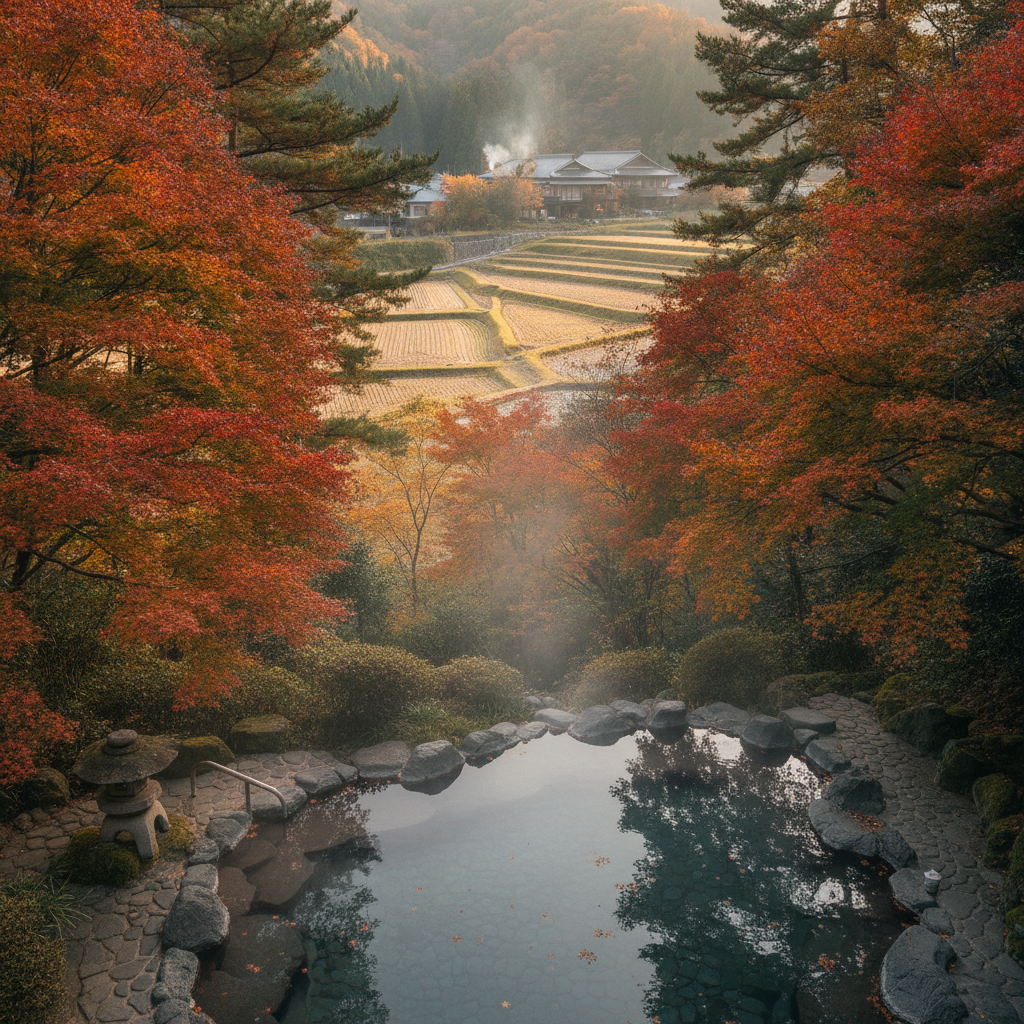
There is a particular kind of quiet that settles over the Japanese countryside in late November — the kind that comes after the crowds have gone home, after the peak foliage season has passed, and before the first winter snowfall blankets the mountain villages. The harvest is winding down. The rice paddies have been cut back to amber stubs. And the ryokans that were fully booked through mid-November suddenly have rooms available, sometimes at rates that feel almost impossible for the quality they deliver.
Why Late November Is a Hidden Travel Window
Most travelers targeting Japan's autumn season book around the peak koyo — the Japanese word for autumn leaf viewing — which typically peaks in mid to late October in the north and early to mid-November in central regions. By the time late November arrives, many domestic and international tourists have already returned home, convinced the best colors are behind them. What they miss is the quieter, more intimate version of autumn that lingers in rural valleys and mountain towns, where the last ginkgo trees hold their gold and the thermal springs feel warmer against the cooling air.
The Shoulder Effect on Ryokan Pricing
Ryokans — traditional Japanese inns that typically include dinner and breakfast — operate on a tiered pricing model tied closely to occupancy and season. During peak foliage weekends, properties in regions like Tohoku, the Kii Peninsula, and the Noto coast can charge rates that rival high-end Western hotels. In the final week of November, the same rooms frequently drop to off-season pricing while the landscape remains genuinely beautiful. Travelers who use platforms like Jalan or Rakuten Travel — both popular Japanese booking systems with English-language options — will notice the price difference clearly when comparing early versus late November availability.
Rural Onsen Regions Worth Planning Around
The best late November experiences tend to cluster in areas where thermal activity, mountain scenery, and traditional culture converge without requiring major transit hubs. These aren't places that appear prominently in standard tourist itineraries, which is precisely why they reward the traveler willing to do a little extra research.
Nyuto Onsen in Akita Prefecture
Nyuto Onsen, a cluster of small bathhouses deep in the mountains of Akita Prefecture, sits at an elevation that gives it a moody, mist-covered character by late November. The milky, mineral-rich waters here are fed by separate springs, and each of the seven bathhouses has a distinct feel. At this time of year, the surrounding beech forests have dropped most of their leaves, but the skeletal canopy against the gray sky carries its own stark beauty. Accommodations here are rustic by design — stone baths, wooden floors, communal meals served in tatami rooms — and the absence of crowds makes the experience feel genuinely immersive rather than performative.
Kinosaki Onsen in Hyogo Prefecture
Kinosaki Onsen operates differently from isolated mountain retreats. It's a walkable hot spring town where guests move between seven public bathhouses in yukata robes, the wooden clogs echoing on stone streets. By late November, the willow trees lining the central canal have gone bare, the streets are nearly empty on weekdays, and the ryokans drop their prices noticeably from the October peak. The region is accessible by direct limited express train from Kyoto via the Kinosaki Arima line, making it one of the more logistically straightforward rural onsen destinations for travelers who prefer not to rent a car.
Planning the Financial Side of a Ryokan Stay
A full-service ryokan stay — with kaiseki dinner, traditional breakfast, and private or shared onsen access — is not a budget experience, but the value calculation shifts significantly in late November. Understanding what drives ryokan pricing helps travelers time their bookings intelligently and identify genuine value rather than simply chasing the lowest rate.
Reading Ryokan Rate Structures
Most ryokans price per person rather than per room, and rates include meals unless you specifically book a room-only option, which some properties now offer. The meal component often accounts for a substantial portion of the total cost, and in late November that cost covers the same quality kaiseki — multi-course seasonal Japanese cuisine — as during peak season, just without the premium markup. Google Flights works well for timing the international airfare piece, since late November fares to Japanese gateway cities like Osaka or Tokyo tend to be lower than October and the December holiday window. Once you're tracking the full trip budget, the combination of cheaper flights and off-peak ryokan rates can make a rural onsen trip meaningfully more affordable than travelers assume.
Using Japanese Booking Platforms Strategically
While Western platforms like Booking.com carry some ryokan inventory, the most comprehensive selection — particularly for smaller rural properties — appears on Jalan and Rakuten Travel. Both platforms offer last-minute availability that rarely surfaces elsewhere, and the late November calendar on these sites often shows openings at properties that were sold out through the previous month. For travelers comfortable with a bit of translation navigation, the savings and selection are worth the extra steps.
What to Expect From the Landscape and Experience
Late November in rural Japan doesn't offer the saturated red-and-orange spectacle of peak foliage, but it delivers something arguably more interesting: a transitional landscape where multiple seasonal cues coexist. Persimmons hang like small lanterns from bare branches. Mountain vegetable dishes at dinner feature the last of the autumn harvest — wild mushrooms, chestnuts, and mountain yams that appear only during this window. The days are short, the light is low and golden, and the evenings arrive early enough that the appeal of soaking in an outdoor hot spring bath under a dark sky becomes entirely practical rather than romantic.
Packing and Preparation for the Season
Temperatures in rural mountain regions can drop into single digits Celsius by late November, particularly at higher elevations. Layering is essential, as the rhythm of ryokan life involves moving between warm interiors and outdoor baths — the contrast is part of the experience, but it requires having the right clothing at hand. Packsmith, a travel packing organization app, is useful for building a seasonal packing list that accounts for this kind of temperature variation across a multi-day trip. Waterproof footwear matters, too, since mountain paths can be damp and cold, and the traditional wooden geta sandals provided at some ryokans are charming but genuinely impractical for extended walking in wet conditions.
Timing Your Trip for Maximum Value and Minimum Competition
The sweet spot for a late November rural onsen trip tends to fall between the third and fourth weeks of the month. By this point, the peak domestic travel associated with mid-November foliage weekends has passed, international visitor volume drops noticeably, and most ryokans are operating at reduced occupancy. Weekday stays consistently outperform weekends on both availability and price, and booking two to three weeks ahead — rather than months in advance — is often sufficient for securing preferred properties during this window.
The travelers who discover Japan in late November tend to come back for it specifically. The country that revealed itself during peak cherry blossom season or peak autumn foliage is vivid and photogenic, but the version that exists when the crowds have cleared carries a different kind of reward — unhurried, quieter, and perhaps closer to the experience that drew them there in the first place. Planning a few weeks ahead, choosing platforms with real rural inventory, and committing to the off-peak window is all it takes to access a side of Japan that the travel calendar tends to keep hidden.