New England's Back Roads Reveal Fall's Most Spectacular Colors Away from Highway Traffic
David Park
02/22/2026
5 min read
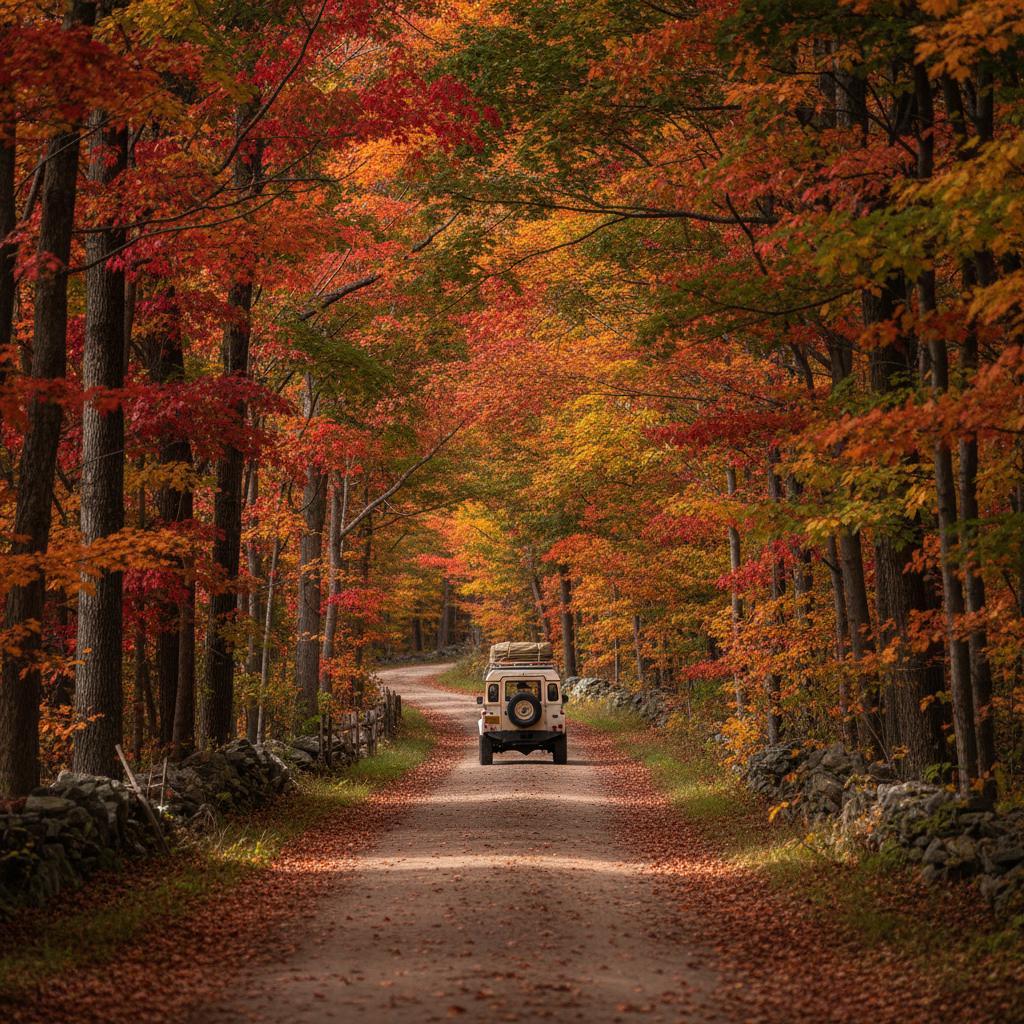
The first maple leaf that turns crimson in late September signals the beginning of New England's most magnificent season. While millions of visitors flock to major highways and popular overlooks, the region's most breathtaking autumn displays unfold along forgotten country roads where centuries-old stone walls frame tunnels of gold and scarlet. These meandering routes through small towns and rural valleys offer not just superior views, but the unhurried pace that allows travelers to fully absorb the season's fleeting beauty. The key lies in abandoning the interstate system entirely, trading efficiency for discovery along roads that appear as thin lines on detailed maps.
Timing becomes everything when chasing peak foliage across New England's diverse elevations and microclimates. Northern Vermont and New Hampshire typically reach their peak during the final week of September, while southern Connecticut and Rhode Island don't hit their stride until mid-October. Elevation changes of just a few hundred feet can shift peak timing by an entire week, making the region's rolling topography a natural calendar of color progression. Smart travelers use resources like FoliageNetwork.com and the official state foliage reports to track conditions in real-time, but the most rewarding approach involves planning flexible itineraries that can adapt to nature's unpredictable schedule.
Vermont's Hidden Valleys Showcase Nature's Artistry
Route 108 through Stowe captures headlines, but Vermont's most spectacular fall displays emerge along lesser-traveled roads like Route 100A between Plymouth and Bridgewater. This winding stretch passes through the Okemo Valley, where sugar maples create natural cathedrals of orange and gold above rushing streams. The road climbs and dips through pastoral landscapes dotted with weathered barns and covered bridges, offering constantly changing perspectives on the surrounding hills. Small towns like Ludlow and Chester provide perfect stopping points for local maple syrup tastings and conversations with residents who've witnessed decades of autumn transformations.
The Northeast Kingdom's Route 5A from West Burke to Lake Willoughby presents perhaps Vermont's most dramatic fall scenery. This remote corridor winds between glacially carved peaks where birches add splashes of brilliant yellow against the deeper reds of maples and oaks. Lake Willoughby itself, nestled between Mount Pisgah and Mount Hor, reflects the surrounding colors in its pristine waters during calm morning hours. The entire 20-mile stretch feels removed from modern life, with old farmsteads and maple sugar houses creating scenes that haven't changed substantially in generations.
Planning Your Vermont Back Road Adventure
Apps like Roadtrippers and Scenic help identify the most photogenic routes, but Vermont's back roads reward spontaneous exploration. Many of the state's most beautiful drives don't appear on major mapping platforms, existing instead as local knowledge passed between generations of residents. Towns like Peacham and Craftsbury Common offer insights into traditional New England life while serving as launching points for drives along unnamed country roads that connect isolated valleys and ridgelines.
New Hampshire's White Mountains Create Dramatic Backdrops
While the Kancamagus Highway attracts heavy traffic, New Hampshire's Route 16 from Conway to Berlin provides equally stunning mountain views with considerably fewer crowds. This northern route follows the Androscoggin River through mixed hardwood forests where the White Mountain peaks create a dramatic backdrop for rolling hills painted in autumn hues. Small communities like Gorham and Berlin retain their authentic character as former logging towns, offering glimpses into the region's industrial heritage alongside spectacular natural beauty.
The Monadnock Region's network of country roads connecting towns like Harrisville, Hancock, and Dublin showcases a gentler side of New Hampshire's fall display. These routes wind around pristine lakes and through forests where colonial-era settlements have evolved into quintessential New England villages. Stone walls built by 18th-century farmers still define property boundaries, creating geometric patterns that complement nature's organic artistry. The relatively low elevation means peak colors arrive later than in the White Mountains, extending the foliage season well into October.
Timing Your White Mountain Exploration
The White Mountains' elevation changes create multiple foliage seasons within a compact area. Higher elevations above 3,000 feet typically peak in mid-September, while valleys and lower slopes reach their prime two weeks later. This natural progression allows travelers to follow the colors downhill over several weeks, adjusting routes based on daily conditions. Apps like Weather Underground provide detailed elevation-specific forecasts that help predict optimal viewing conditions for specific valleys and mountain passes.
Southern New England's Extended Season Rewards Patient Travelers
Massachusetts' Route 2 west of Fitchburg transforms into one of New England's most scenic drives during peak foliage season. The Mohawk Trail, as this historic route is known, winds through the Berkshire Hills where mixed hardwood forests create a tapestry of colors against rolling agricultural valleys. Small towns like Shelburne Falls and Charlemont provide opportunities to explore local craft shops and historic sites while serving as base camps for exploring the region's network of back roads.
Connecticut's Litchfield Hills offer perhaps New England's longest foliage season, with colors persisting well into November in protected valleys. Routes 7 and 44 create a scenic loop through towns like Kent, Washington, and Woodbury, where colonial architecture complements the natural display. The region's numerous state parks and forests provide hiking trails that offer elevated perspectives on the surrounding countryside, while historic sites like Gillette Castle and the Mark Twain House add cultural depth to the natural spectacle.
Fall foliage represents nature's brief but magnificent farewell to the growing season, and New England's back roads provide the most intimate way to witness this annual transformation. The combination of diverse tree species, varied topography, and centuries of careful land stewardship creates displays that attract visitors from around the world. Start mapping your route now, focusing on flexibility and local insights rather than rigid schedules, and prepare to discover why autumn in New England remains one of America's most celebrated natural phenomena.