How Sound Frequency and Volume During Work Hours Affect Focus and Cognitive Performance
Chris Martinez
04/12/2026
4 min read
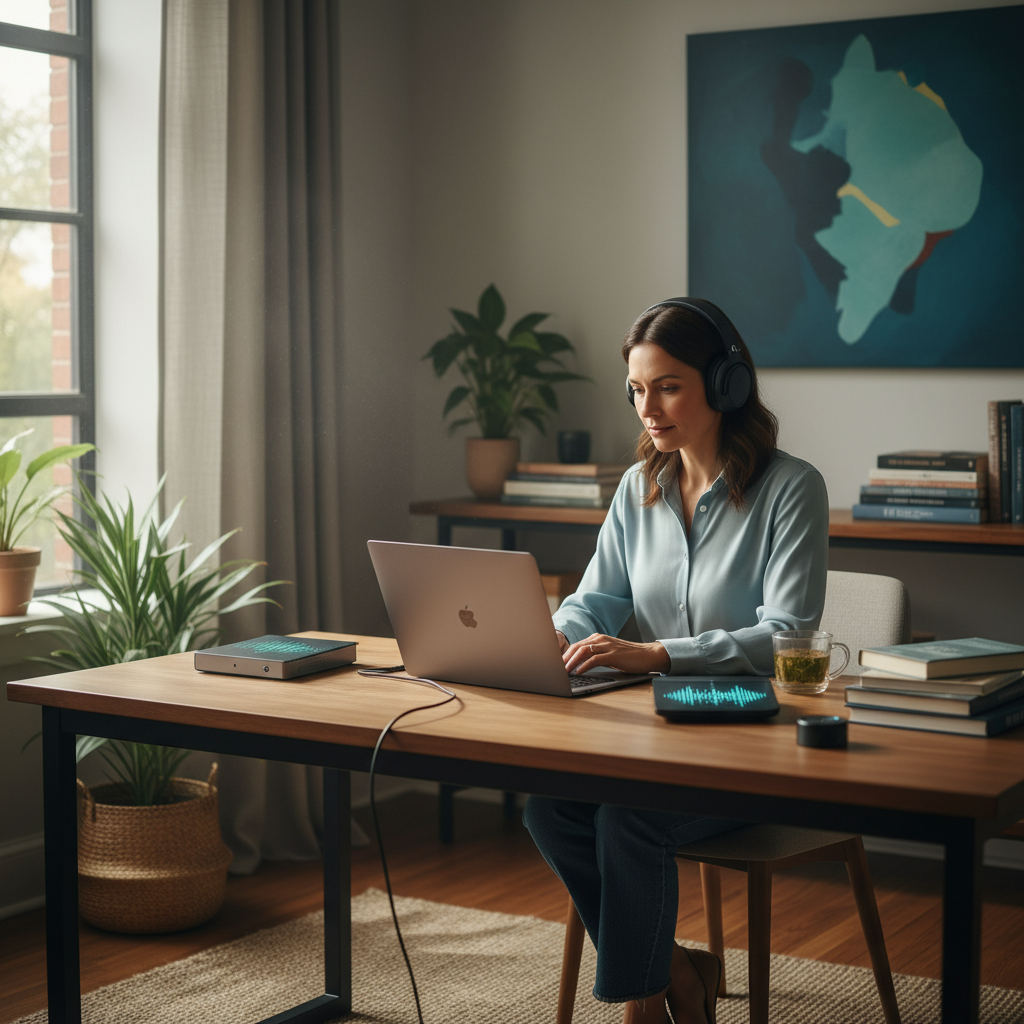
Background noise shapes your brain's ability to process information, maintain attention, and solve complex problems throughout the workday. The frequency range, volume level, and consistency of sounds in your environment directly influence cognitive load, working memory capacity, and decision-making speed.
Your auditory system processes environmental sounds even when you're not consciously listening, creating competition for neural resources that would otherwise support focused thinking. Understanding how different sound characteristics impact cognitive performance allows you to optimize your work environment for sustained mental clarity and productivity.
Find Your Optimal Background Noise Sweet Spot
White noise and ambient sounds perform best at 50-60 decibels, roughly equivalent to light rainfall or quiet conversation in another room. This volume range masks distracting intermittent sounds without overwhelming your auditory processing capacity. Apps like Brain.fm and Noisli offer scientifically designed soundscapes calibrated to this optimal range. Sounds louder than 70 decibels consistently impair concentration and increase stress hormone production, while complete silence can make you hypersensitive to sudden noises.
Choose Low-Frequency Sounds Over High-Frequency Distractions
Deep, consistent frequencies support focus better than variable high-pitched sounds that trigger your brain's alert response. Thunder, ocean waves, and brown noise contain predominantly low frequencies that create a stable acoustic backdrop. High-frequency sounds like phone notifications, keyboard clicking, and sharp voices activate your brain's threat detection system, pulling attention away from complex tasks. Spotify's Focus playlists and YouTube's ambient channels feature carefully filtered audio designed around these frequency principles.
Time Your Sound Exposure to Match Cognitive Demands
Cognitive tasks requiring deep concentration benefit from consistent ambient noise, while creative work often improves with moderate background music or café sounds. Switch to nature sounds or instrumental music during analytical work, then experiment with slightly more complex audio during brainstorming sessions. Coffee shop ambience, available through apps like Coffitivity, provides the right level of speech and activity sounds to stimulate creative thinking without overwhelming focus. Adjust your audio environment based on whether you're processing information, generating ideas, or solving problems.
Block Sudden Volume Changes That Spike Stress Hormones
Your nervous system reacts more strongly to sudden sound changes than to consistent volume levels. Construction noise, slamming doors, and fluctuating music volumes trigger stress responses that persist long after the sound ends. Noise-canceling headphones like those from Bose or Sony actively reduce environmental variability, allowing your cortisol levels to remain stable throughout the day. Even brief exposure to jarring sounds can disrupt concentration for 15-20 minutes as your brain works to re-establish focus.
Experiment With Binaural Beats for Enhanced Mental States
Binaural beats use slightly different frequencies in each ear to encourage specific brainwave patterns associated with focus, relaxation, or alertness. Alpha waves (8-14 Hz) support calm concentration, while beta waves (15-30 Hz) enhance analytical thinking. Research suggests these frequency differences can influence cognitive performance when listened to for 15-30 minutes. Apps like Atmosphere and websites like MyNoise offer binaural beat tracks designed for different mental states, though individual responses vary significantly.
Create Acoustic Boundaries in Open Office Environments
Shared workspaces require strategic sound management to protect individual cognitive performance. Position yourself away from high-traffic areas, phone stations, and copy machines that generate unpredictable noise patterns. Use desk fans, small speakers, or white noise machines to create consistent audio buffers around your workspace. Companies like Herman Miller now design office furniture with integrated sound masking features. Communicate with colleagues about maintaining reasonable conversation volumes during peak concentration hours.
Monitor How Different Music Genres Affect Your Processing Speed
Instrumental music generally supports cognitive tasks better than lyrical content, which competes with your brain's language processing centers. Classical music, ambient electronic, and film scores provide melodic structure without linguistic interference. However, familiar songs with lyrics can sometimes enhance routine tasks that don't require intense focus. Lo-fi hip-hop channels on platforms like YouTube have gained popularity because their repetitive, mellow patterns create predictable audio environments. Track your performance across different musical styles to identify your personal optimization patterns.
Establish Quiet Recovery Periods to Prevent Auditory Fatigue
Continuous sound exposure, even at optimal levels, can exhaust your auditory processing capacity over extended periods. Build 10-15 minute quiet breaks into your schedule every two hours to reset your acoustic sensitivity. During these intervals, step outside, find a quiet room, or simply remove headphones to give your auditory system time to recalibrate. This practice prevents the gradual decline in sound discrimination that occurs with prolonged exposure and maintains your ability to benefit from optimized audio environments throughout the day.
Sound optimization in work environments continues evolving as researchers better understand the neurological mechanisms behind auditory processing and attention. Smart building systems now incorporate real-time noise monitoring and automated sound masking, while wearable devices track individual responses to different acoustic conditions for personalized audio recommendations.