Why walking meetings boost creativity and decision-making more than office discussions
Emily Rodriguez
02/18/2026
4 min read
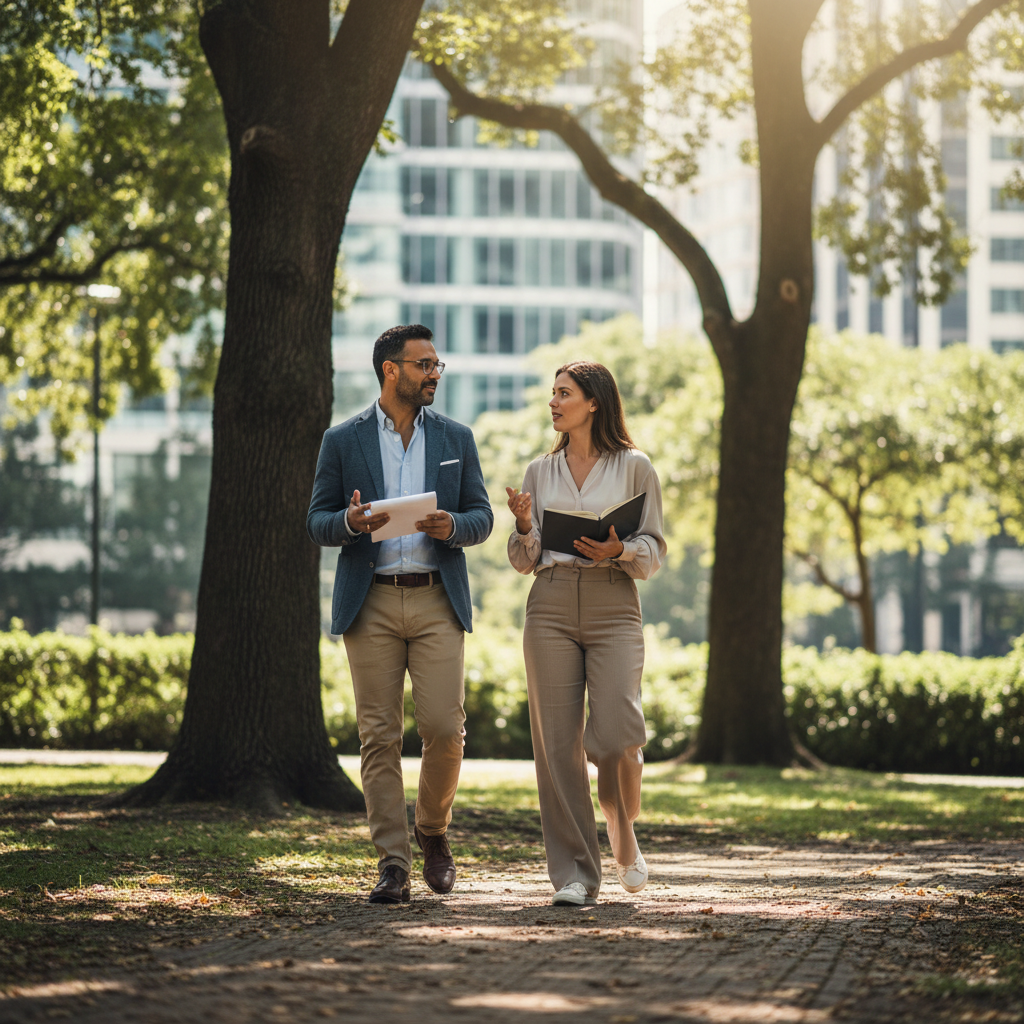
The boardroom table, once the undisputed throne of corporate decision-making, faces an unlikely challenger: the humble sidewalk. Companies from Apple to LinkedIn have discovered what ancient philosophers knew intuitively—that movement and mental clarity walk hand in hand. This shift toward ambulatory discussions represents more than just a trendy wellness initiative; it reflects a deeper understanding of how the human brain processes complex information and generates innovative solutions.
What Makes Walking Different from Sitting?
When people walk, their brains undergo measurable changes that enhance cognitive function. The rhythmic nature of walking creates what neuroscientists call a "bilateral cross-pattern movement," where the left and right sides of the brain communicate more effectively. This increased neural connectivity translates into improved problem-solving abilities and heightened creative thinking. Walking also increases blood flow to the prefrontal cortex, the brain region responsible for executive functions like decision-making and strategic planning. The gentle physical activity releases endorphins and reduces cortisol levels, creating an optimal mental state for processing information and generating ideas.
How Does Movement Change Group Dynamics?
Traditional conference rooms create invisible hierarchies through seating arrangements and formal structures. Walking meetings dissolve these power dynamics naturally. Without assigned seats or a head of the table, participants relate to each other as equals moving toward a common destination. The side-by-side positioning during walks eliminates the confrontational aspect of face-to-face negotiations, making difficult conversations flow more easily. Team members often find themselves sharing ideas more freely when they're not trapped in a sterile meeting room. The shared physical activity creates a sense of collaboration and mutual purpose that translates into more productive discussions.
Why Do Creative Insights Emerge More Frequently?
The Japanese concept of shinrin-yoku, or "forest bathing," recognizes that natural environments restore mental clarity and spark innovation. Even urban walking meetings tap into this phenomenon by removing participants from their usual indoor constraints. The changing scenery provides gentle stimulation that keeps minds engaged without overwhelming them. This environmental variety prevents the mental stagnation that often occurs in windowless conference rooms. Walking meetings also eliminate many digital distractions—it's difficult to check emails or browse social media while navigating sidewalks. This forced disconnection from screens allows deeper focus on the conversation at hand.
What Types of Decisions Benefit Most from Walking?
Strategic planning sessions and creative brainstorming particularly benefit from the walking meeting format. Complex problems requiring innovative solutions often resolve more quickly during walks than in traditional settings. Personnel discussions and sensitive conversations also flow more naturally when participants aren't making intense eye contact across a table. However, walking meetings work best for discussions involving three people or fewer—larger groups become unwieldy and some participants inevitably get left behind. Technical presentations requiring visual aids or detailed data analysis still need conference room settings. The key lies in matching the meeting format to the desired outcome.
How Can You Implement Walking Meetings Effectively?
Successful walking meetings require thoughtful preparation and route selection. Choose familiar paths with minimal traffic interruptions—Google's Mountain View campus and Facebook's Menlo Park headquarters both feature dedicated walking trails for this purpose. Plan routes lasting 20-30 minutes, which provides enough time for substantial discussions without causing fatigue. Inform participants in advance so they can dress appropriately and bring notebooks for capturing key insights. Weather contingency plans ensure meetings can proceed regardless of conditions. Some executives keep a standard walking route mapped out, while others vary their paths to match different types of discussions.
What Results Can Organizations Expect?
Companies implementing walking meetings report measurable improvements in employee engagement and solution quality. Teams develop stronger working relationships when they share the informal experience of walking together. Decision-making timelines often shorten because the relaxed atmosphere encourages honest communication about potential obstacles or concerns. The practice also supports broader wellness initiatives, contributing to reduced healthcare costs and improved employee satisfaction. Organizations like Nilofer Merchant's consulting firm have made walking meetings standard practice, reporting that clients generate more actionable insights during these sessions than in traditional boardroom discussions.
The transformation from conference table to walking path represents more than a change in venue—it acknowledges that the human brain evolved to think while moving. As organizations seek competitive advantages through innovation and agility, the simple act of putting one foot in front of the other may provide the mental catalyst they've been searching for in expensive team-building exercises and productivity software.