How Booking Amtrak Sleeping Cars During Low-Demand Winter Months Delivers Hotel-Quality Comfort at Coach Prices
Amanda Foster
06/29/2026
5 min read
Winter travel carries a reputation for crowded airports, delayed flights, and the kind of stress that makes staying home feel like the better option. But there's a quieter way to move across the country during the colder months — one that trades cramped terminals for wood-paneled corridors, turbulence for the gentle sway of steel on rail, and overpriced airport sandwiches for a proper dining car meal. Amtrak's sleeping accommodations, which feel like a genuine splurge during peak travel seasons, become surprisingly attainable when bookings drop off in January, February, and early March.
Book Roomettes During January and February Windows
Amtrak prices its sleeping car inventory dynamically, meaning the same roomette on the California Zephyr or the Empire Builder can swing dramatically in cost depending on demand. During the post-holiday lull that stretches from early January through mid-February, that demand drops sharply. Routes that sell out weeks in advance in summer often show wide-open availability with noticeably lower base fares. Booking four to six weeks ahead during this window — rather than the day before — tends to lock in the best combination of price and cabin selection before any promotional adjustments kick in.
Understand What a Roomette Actually Includes
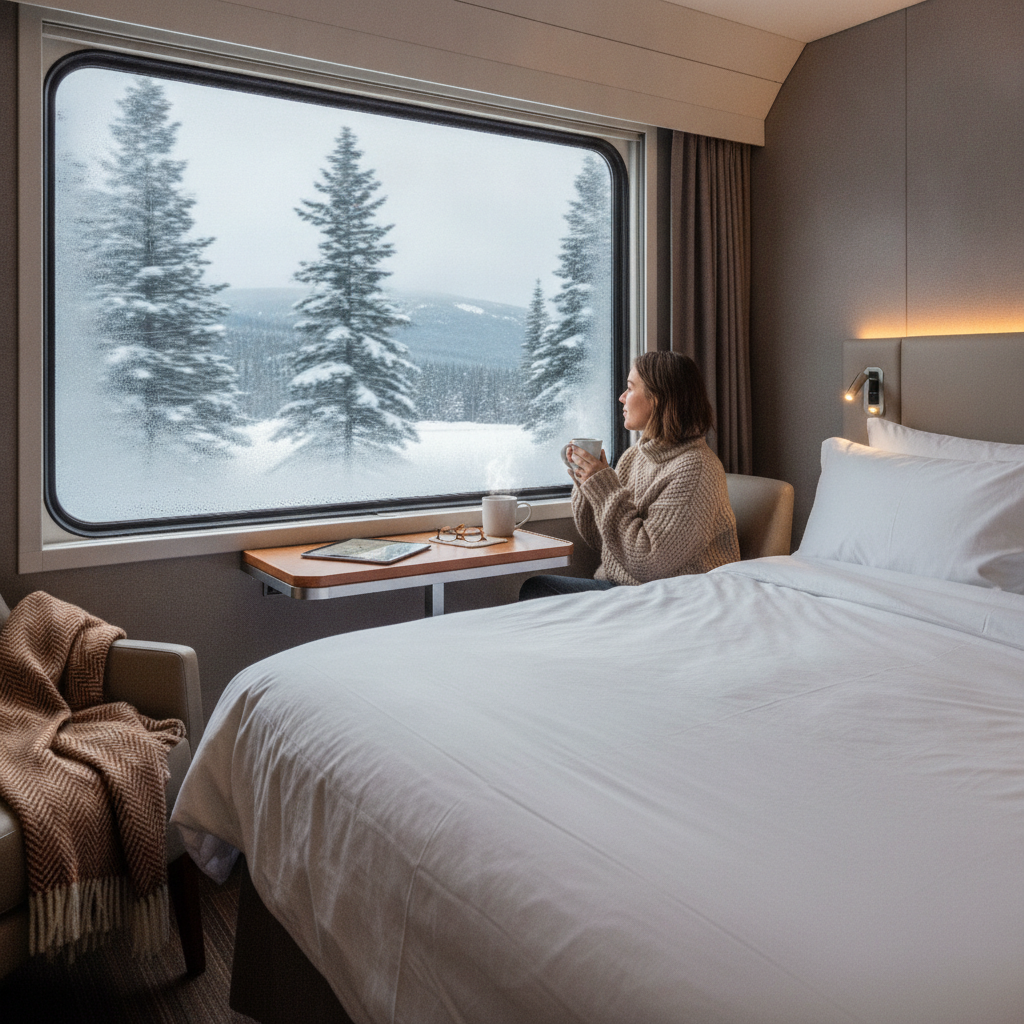
For travelers who've never booked sleeping car service, the value math can look confusing at first. A roomette on most long-distance Amtrak trains includes a private enclosed space with two reclining seats that convert to berths at night, a large window, climate controls, and access to your own electrical outlets. More significantly, the fare bundles all meals in the dining car, meaning breakfast, lunch, and dinner are covered. When you factor out the cost of three meals per travel day — especially on a multi-night journey like the Southwest Chief from Chicago to Los Angeles — the gap between a roomette fare and a coach ticket narrows considerably.
Choose Routes With Scenic Winter Appeal
Not every Amtrak corridor delivers the same experience, and winter actually enhances certain routes in ways summer can't replicate. The Empire Builder, which runs from Chicago through the northern Rockies to Seattle and Portland, passes through landscapes blanketed in snow that look almost cinematic from a sleeping car window. The California Zephyr threads through Colorado's Rockies and the Sierra Nevada range, where winter light creates a low golden contrast against white peaks. These aren't compromised experiences — they're genuinely different, and for photographers or anyone drawn to dramatic scenery, winter can be the preferred season entirely.
Use the Amtrak App to Monitor Fare Drops
Amtrak's own app and website update sleeping car availability in real time, and prices do shift. Setting up a search alert through a third-party travel tool, or simply checking the Amtrak app every few days once you've identified a route and date range, can surface meaningful drops. Sleeping car inventory is tiered — as lower-priced buckets sell out, the price steps up — but in low-demand months, those lower tiers stay available longer. Flexibility with departure dates by even one or two days often makes a noticeable difference in what you'll pay.
Plan Longer Journeys to Maximize the Value
The economics of a sleeping car work in your favor most powerfully on overnight and multi-night trips. A single-night journey from New York Penn Station to Chicago on the Lake Shore Limited, for example, eliminates one night of hotel cost entirely while you cover more than 900 miles. The longer the journey, the more value accumulates — meals included, a private space for sleeping, and no checked baggage fees for the two bags Amtrak allows. Travelers crossing multiple time zones often arrive more rested than they would after a red-eye flight, which has its own downstream value in productivity and enjoyment.
Pack Smart for a Compact Private Space
A roomette is comfortable, but it rewards some forethought about what you bring aboard. A small personal bag that fits in the overhead storage or under the seat handles daily needs — reading material, snacks, a portable charger, and layers for temperature variation. Larger bags check at the station. Noise-canceling earbuds or headphones improve the experience significantly since train sounds, while generally soothing, can vary. Bringing a few familiar items — a good book, a playlist, a light blanket — turns the cabin into something that genuinely functions like a small private hotel room rolling through the countryside.
Combine With a Destination Weekend to Extend the Experience
One underused approach pairs an Amtrak overnight with a short city stay at the destination. Arriving in New Orleans via the City of New Orleans train, or pulling into Denver on the California Zephyr for a weekend before flying home, reframes the train as more than transportation — it becomes the first act of the trip itself. Winter weekends in cities like New Orleans, Chicago's River North neighborhood, or Portland's Pearl District tend to offer lower hotel rates and shorter lines at popular restaurants, which layers additional savings on top of the sleeping car value.
Consider Accessible Bedrooms for More Space at Similar Prices
Amtrak's accessible bedroom, designed for travelers who need more room, is occasionally available for standard booking when not reserved by passengers requiring accessibility accommodations. It offers significantly more floor space than a standard roomette, a larger window, and a private toilet and shower within the room itself — features that in a standard bedroom cost considerably more. During low-demand winter months, this option sometimes appears at prices closer to a standard roomette than a full bedroom. Checking both room types when searching gives you a clearer picture of what's actually available on any given departure.
The practical case for winter sleeping car travel is straightforward: lower prices, quieter trains, and scenery that rewards attention rather than competing with heat and humidity. As Amtrak continues expanding its long-distance network and modernizing rolling stock on key corridors, the sleeping car experience is likely to draw more attention from travelers who've grown tired of the airport routine. Getting acquainted with these routes during the quieter winter months means discovering an approach to travel that, once experienced, tends to stay in the rotation for years.