How Booking Amtrak Sleeping Cars During Low-Demand Winter Months Delivers Hotel-Quality Comfort at Coach Prices
Amanda Foster
06/29/2026
5 min read
Winter travel has a reputation problem. Most people associate the off-season with canceled flights, overcrowded airports, and the grim fluorescent atmosphere of a budget motel. What they're missing is one of the most underused travel secrets in North America: Amtrak sleeping car accommodations that, during low-demand winter months, drop to prices that would barely cover a mid-range hotel room — while delivering a private cabin, full meals, and scenery that no airline window can match.
The logic is straightforward. Amtrak prices sleeping car rooms dynamically, much like airlines price seats. When demand drops — particularly from November through February on many routes — those same roomettes and bedrooms that command premium rates during summer or the holidays become genuinely affordable. For travelers willing to rethink how they get from point A to point B, the winter calendar is an open door.
Book Roomettes as Your Starting Point
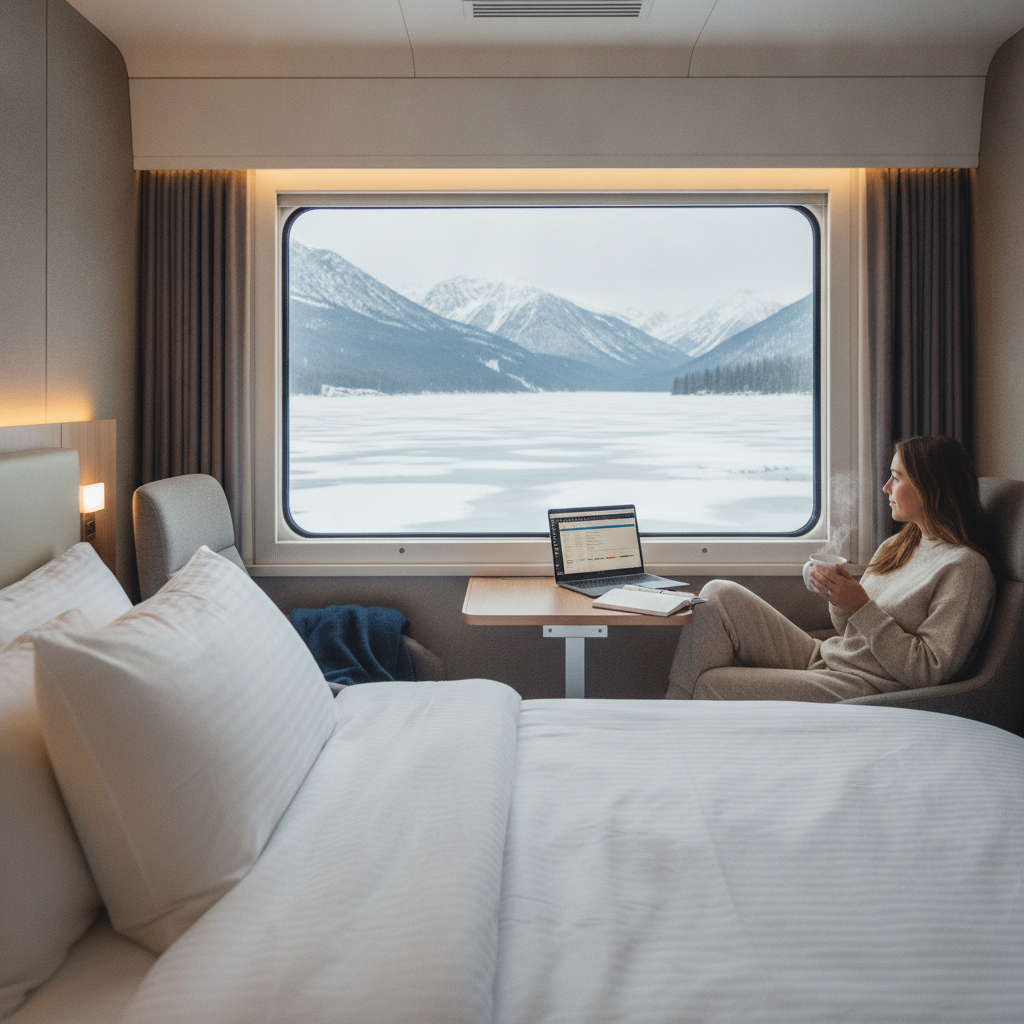
The roomette is the entry-level sleeping car option on most Amtrak long-distance routes, and it punches well above its price class in the off-season. Two seats face each other and convert into upper and lower bunks, with a large window, reading lights, and climate control all to yourself. What makes winter booking compelling is that roomette fares on routes like the California Zephyr or the Empire Builder can drop to rates comparable to a standard hotel room — yet the fare includes all meals in the dining car, which changes the value calculation entirely.
Factor In Meals to See the Real Savings
One of the most overlooked advantages of booking a sleeping car is that meals in Amtrak's dining car are included in the fare. Breakfast, lunch, and dinner are served at actual tables with linen and real flatware — not a tray handed over a sneeze guard. When travelers run the true cost comparison, accounting for three daily restaurant meals they won't be paying for separately, the sleeping car fare often comes out ahead of flying when total trip expenses are tallied. During winter months when base fares are lower, that math becomes even more favorable.
Use the Amtrak App to Watch Fare Drops
Amtrak's dynamic pricing system works in the traveler's favor when they know how to watch it. The Amtrak app allows users to set up trip searches and monitor routes over time. Sleeping car fares often fluctuate week to week based on remaining inventory. On less-traveled winter routes — particularly mid-week departures in January or February — fares can drop noticeably as the departure date approaches and cabins go unsold. Checking consistently over a two-to-three week window before a planned trip often reveals opportunities that a single search won't surface.
Choose Routes With Scenic Winter Payoff
Not all winter train routes are created equal. The Southwest Chief between Chicago and Los Angeles passes through the snow-dusted New Mexico high desert and the red rock formations near Albuquerque, delivering landscapes that are arguably more dramatic in winter than summer. The Coast Starlight between Los Angeles and Seattle hugs the Pacific coastline and crosses the Cascades. Choosing a route where the scenery itself is part of the value proposition turns a transportation decision into a genuine travel experience — and the large windows in a roomette are purpose-built for exactly that.
Book Bedrooms for Group or Couple Travel
For two travelers, the step up from a roomette to a bedroom makes considerable financial sense in the off-season. Amtrak bedrooms are larger private rooms with a full-size lower bed, a fold-down upper bunk, an in-room toilet, and a shower — accommodations that rival what a mid-tier hotel delivers on the road. When the fare is split between two people during a low-demand winter window, the per-person cost can feel almost improbable for what's included. Families or couples planning trips between cities like New Orleans and Chicago — served by the City of New Orleans route — should compare bedroom fares against the combined cost of flights plus hotel nights for a fair assessment.
Use Amtrak Guest Rewards Points Strategically
Amtrak's loyalty program, Amtrak Guest Rewards, allows members to accumulate points on every trip and redeem them for future travel. Sleeping car bookings earn points at a higher rate than coach, and partner credit cards like the Amtrak Guest Rewards Mastercard accelerate point accumulation on everyday spending. Redeeming points during winter when base fares are already lower stretches the value of accumulated rewards further. A points redemption that covers a sleeping car roomette during peak summer might instead cover an entire bedroom upgrade during a January booking — a meaningful difference in the quality of the experience.
Arrive Early to Enjoy the Metropolitan Lounge
Many major Amtrak stations offer sleeping car passengers access to dedicated Metropolitan Lounges before boarding. Chicago Union Station and Los Angeles Union Station both maintain these spaces, which include comfortable seating, complimentary snacks and beverages, and a quieter atmosphere than the general waiting areas. Arriving an hour early to use the lounge rather than standing at a gate transforms the pre-departure experience considerably. During winter months when passenger volumes are lower, these lounges are typically uncrowded, making them genuinely pleasant rather than merely functional.
Plan Connections Around Chicago Strategically
Chicago is the hub of Amtrak's long-distance network, and many cross-country itineraries require an overnight connection there. Rather than treating the layover as an inconvenience, building in a night at a Chicago hotel — or even booking connecting trains to allow an afternoon in the city — turns a logistical pause into a bonus stop. Winter in Chicago has its challenges, but the city's museums, architecture, and restaurant scene are all operating at full capacity with far fewer tourists than summer brings. Using the connection intentionally rather than minimizing it adds dimension to the overall journey.
Long-distance train travel in North America is quietly having a moment. Amtrak has been expanding its route reliability, modernizing its fleet on select corridors, and improving dining options in response to traveler feedback. As more people look for alternatives to the friction of air travel, sleeping car accommodations — especially during the affordable winter window — represent one of the more compelling rediscoveries in American travel. The cabins are there, the scenery is waiting, and for much of the winter calendar, so are the prices.