How Extended Warranty Pricing Structures Reveal When Third-Party Protection Plans Beat Retailer Offers
Jennifer Walsh
07/01/2026
4 min read
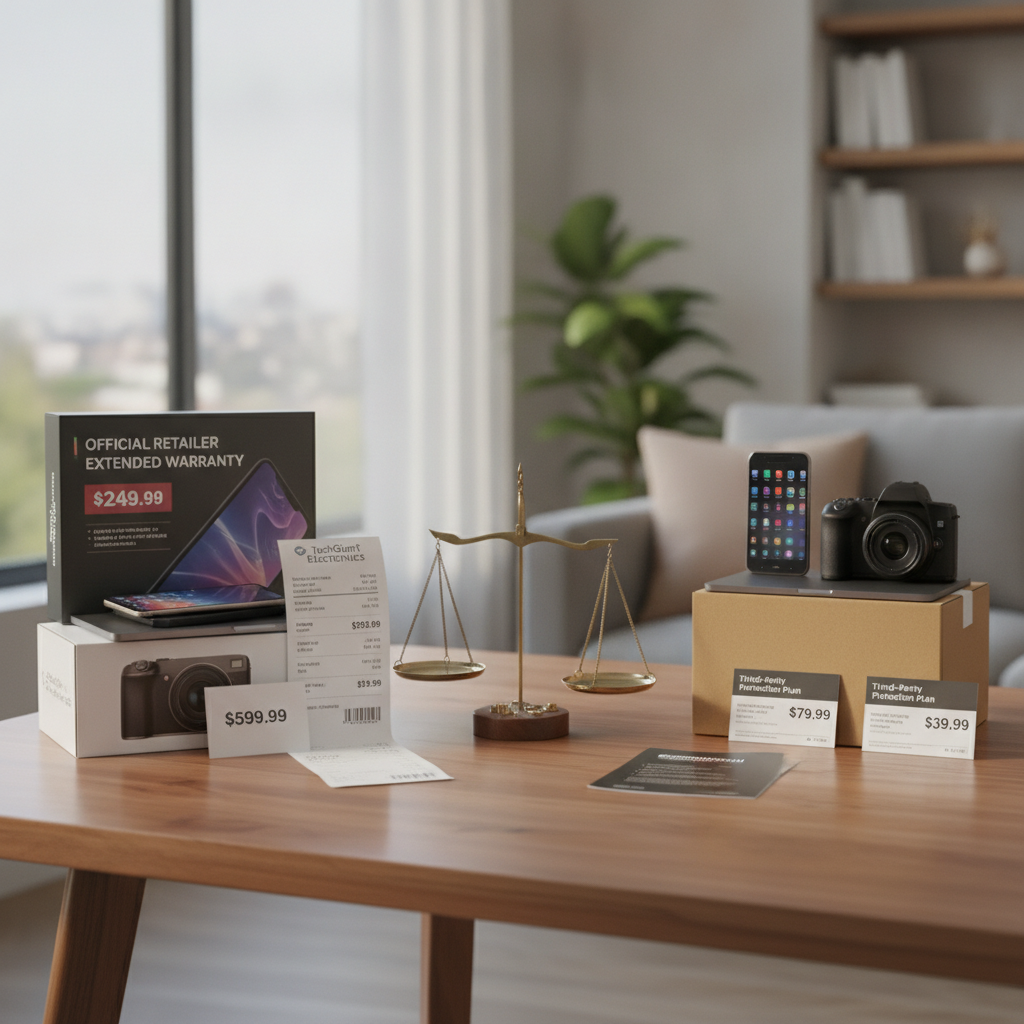
Extended warranties are one of the most profitable add-ons retailers sell, which means the pricing structure built around them tells a story most shoppers never stop to read. Understanding how these plans are priced — and who profits at each layer — makes it considerably easier to spot when a third-party provider offers genuine value versus when the retailer's own plan is the better bet.
How Do Retailer Extended Warranties Generate Such High Margins?
When a cashier at Best Buy or Costco offers an extended warranty at checkout, that plan rarely costs the retailer much to administer. Retailers typically mark up protection plans well beyond what the underlying coverage costs to deliver, because most products never require a claim. The checkout environment is also designed to encourage impulse decisions — shoppers are already in spending mode, the item feels new and worth protecting, and the fear of a future repair bill is fresh. That combination makes in-store warranty offers particularly profitable for retailers, not necessarily useful for buyers.
What Does the Pricing Structure of a Plan Actually Reveal?
A plan's price relative to the product's purchase price is one of the clearest signals of its real value. When a retailer prices an extended warranty at 20 to 30 percent of a product's cost, the economics rarely favor the buyer. Appliances, laptops, and televisions have well-documented failure rates, and most breakdowns happen either early — covered by the manufacturer — or late, outside most extended warranty windows entirely. A plan priced at 10 percent or less of the item's value, with broad coverage terms, tells a different story and sits closer to genuine protection than profit extraction.
When Do Third-Party Providers Offer Structurally Better Terms?
Companies like Upsie, Extend, and Asurion operate outside the retail checkout environment, which changes their incentive structure. Because they compete on coverage and price rather than capitalizing on in-store emotional momentum, third-party providers often offer longer coverage windows, lower deductibles, and transferable plans that add resale value to a product. Shoppers who compare plans on Upsie against what Apple or Samsung charges through their retail channels frequently find the third-party option covers more failure types at a meaningfully lower annual cost — particularly for mid-range electronics where manufacturer plans are priced aggressively.
Which Product Categories Favor Third-Party Plans Most Consistently?
Small kitchen appliances, mid-tier laptops, and OLED televisions tend to show the biggest pricing gaps between retailer and third-party plans. Retailers know these categories drive high warranty attachment rates because buyers perceive them as fragile or expensive to repair. That perception inflates in-store plan prices without necessarily reflecting actual repair costs. Portable appliances and consumer electronics also benefit from the transferable coverage many third-party providers offer — something most retailer plans explicitly exclude. For major appliances from brands like LG or Whirlpool, the calculus shifts slightly, since manufacturer-affiliated plans sometimes provide faster authorized service networks.
Where Do Retailer Plans Actually Hold an Advantage?
Retailer plans aren't uniformly bad deals. For products sold with aggressive bundled coverage — certain laptops at Costco, for instance, where the protection plan includes accidental damage and in-home service — the price-to-value ratio can compete with or outperform third-party options. Brand-affiliated plans for products like Apple devices through AppleCare also benefit from direct access to certified technicians and original parts, which independent providers typically can't match. The retailer advantage tends to hold when the plan includes features a third-party equivalent doesn't offer: on-site service, no-lemon replacement guarantees, or zero deductibles on categories with high repair frequency.
How Can You Evaluate Any Extended Warranty Before Buying?
Before accepting or declining any extended warranty, take a few minutes to examine what the plan actually covers versus what it excludes. Read the failure type list carefully — many plans exclude the most common causes of device failure, like software issues or cosmetic damage. Compare the total plan cost against the item's replacement price: if the product would cost only slightly more to replace outright, the warranty math rarely works in your favor. You can use tools like Consumer Reports' reliability data or warranty comparison platforms to benchmark a retailer's offer against third-party alternatives in under five minutes. Checking whether a plan is transferable also matters if you tend to sell or trade devices before they age out of coverage.
Extended warranty value comes down to pricing transparency and coverage depth — two factors that shoppers can assess objectively before any purchase. Retailer plans profit from urgency and convenience, while third-party providers often compete on terms. Reading the structure of any protection plan, rather than just its price tag, consistently separates the ones worth buying from the ones that benefit the seller far more than the buyer.