How Open-Box Appliance Programs at Major Retailers Deliver Near-New Quality at Refurbished Prices
Robert Kim
07/01/2026
6 min read
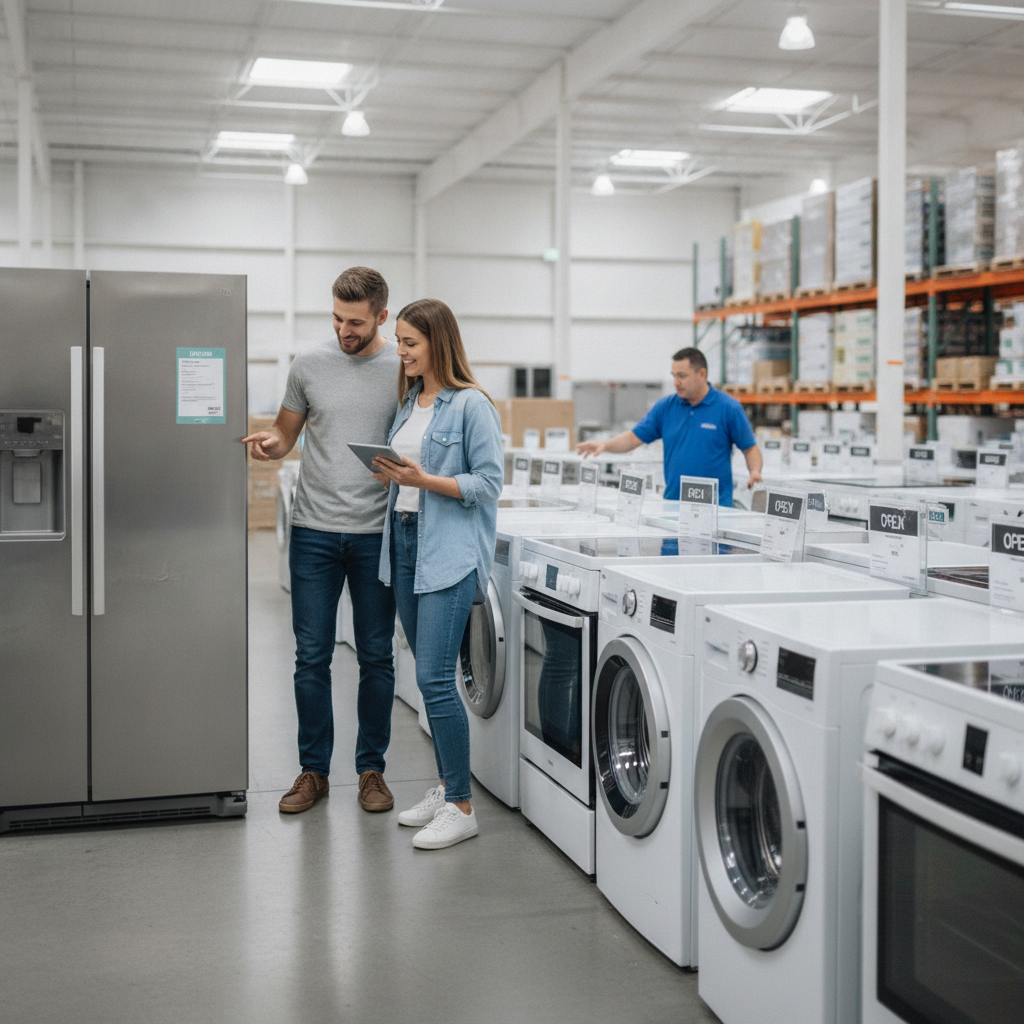
Open-box appliances occupy a genuinely useful middle ground between full retail pricing and the unpredictability of secondhand markets. These are products that were returned to stores — sometimes used briefly, sometimes never used at all — and then repackaged and marked down for resale. Retailers like Best Buy, Home Depot, and Costco have turned this into structured programs with grading systems, warranty options, and return policies that make the purchase feel far less risky than it once did. For shoppers replacing a refrigerator, dishwasher, or washer-dryer set, that combination of reduced price and managed risk is worth understanding carefully.
Why Open-Box Has Changed as a Category
The open-box market has matured considerably over the past decade. What used to feel like a gamble — grabbing a scuffed box from a back shelf with no documentation — now comes with condition grades, manufacturer serial numbers, and in many cases the original packaging. Major retailers have responded to customer demand for transparency by implementing structured evaluation processes before anything hits the open-box floor. Best Buy's open-box program, for instance, grades products as Excellent, Good, or Fair, with each tier carrying different price reductions and representing different levels of use or cosmetic wear. That grading system gives you a starting point for evaluating whether the discount is worth any trade-offs.
Understanding Condition Grades Before You Buy
Condition labels matter more than price tags when evaluating open-box appliances. An "Excellent" or "Like New" designation typically means the item was returned without ever being installed or used, or was used so briefly that no meaningful wear occurred. "Good" usually signals some cosmetic imperfections — a small scratch on a side panel, a missing accessory, or a box that was opened and resealed. "Fair" or "Acceptable" means more visible wear and potentially missing components. The discount scales accordingly, so understanding what each grade actually represents at a specific retailer helps you decide whether you're trading cosmetics for savings or accepting functional compromises.
The Return Policy Window Is Your Real Protection
One of the most underappreciated aspects of buying open-box from a major retailer is the return policy that still applies to those items. Unlike buying from a private seller or a liquidation site, purchasing open-box at Best Buy or Home Depot typically means you still get a return window — often 15 days for standard customers, longer for loyalty members. That window gives you time to install the appliance, run it through a full cycle or two, and confirm it performs as expected before you're fully committed. This is meaningfully different from buying refurbished through a third-party seller, where returns are often more complicated or restricted.
Manufacturer Warranties Often Still Apply
Many open-box appliances retain a portion of the original manufacturer warranty, particularly if the product was returned early in its lifecycle. A dishwasher returned after two weeks of use, for example, may still carry most of its original one-year parts and labor coverage. Some retailers also offer extended protection plans that can be purchased on open-box items at the point of sale, though the pricing varies and it's worth comparing that cost against the total discount you're receiving. At Costco, the return policy itself is so generous that the warranty question becomes somewhat secondary — the store's blanket satisfaction guarantee covers most appliances regardless of condition grade.
Where to Find the Best Open-Box Appliance Selections
Not every store location carries a strong open-box appliance inventory, and availability shifts frequently. Best Buy's website allows you to filter by open-box condition and check local store stock, which saves a trip for nothing. Home Depot's liquidation and open-box sections tend to surface in-store rather than online, making physical visits more useful there. Costco occasionally sells open-box floor models when a product line is discontinued or a display unit is retired, and those deals can be significant. Samsung and LG also run their own certified open-box programs through their direct websites, which include refurbishment steps performed by factory-trained technicians — a meaningful upgrade in process rigor compared to a simple customer return.
Timing Your Purchase Around Appliance Turnover
Open-box inventory increases at predictable times. After major shopping holidays — particularly late November through January — return volumes climb as gift purchases come back and post-holiday shopping decisions get reversed. Spring is another active period, when people start home projects and appliance upgrades. Visiting a store's open-box section in February or March often surfaces recent holiday returns that have just been evaluated and priced. Display model clearances also tend to happen when manufacturers release new product lines, which typically follows a late-summer cadence. Showing up at the right time doesn't require guesswork — it just requires knowing which parts of the year generate the most return activity.
Inspecting an Open-Box Appliance In Person
When you have the opportunity to examine an open-box appliance before purchasing, use it deliberately. For refrigerators, check that door seals are intact, shelves are present and uncracked, and the unit powers on and reaches temperature. For dishwashers and washing machines, look at the drum and spray arms for damage, and confirm the control panel responds correctly. Cosmetic scratches on sides or backs are generally irrelevant if the unit is going into a built-in space. Ask a floor associate whether the item came with original accessories and documentation — missing components can sometimes be ordered directly from the manufacturer, but it's better to know upfront what you're working with.
Stacking Discounts to Improve the Value Further
Open-box pricing is already discounted, but there are often additional ways to reduce the final cost. Many retailers honor price-match guarantees even on open-box items if an identical unit is available at a competitor's open-box price. Loyalty programs — like Best Buy's My Best Buy membership — can add cashback or reward points on top of the open-box reduction. Store credit cards occasionally offer interest-free financing periods, which matters when replacing an appliance unexpectedly. Pairing an open-box purchase with a timing-based strategy, such as shopping during a holiday promotional weekend when retailers layer additional discounts, can occasionally produce savings that rival the deepest clearance pricing on discontinued models.
Open-box appliance programs have evolved from informal shelf-clearing into well-structured, consumer-friendly alternatives to full-price retail. When you understand the grading systems, know which retailers have the strongest return and warranty protections, and shop during periods of high return volume, the value proposition becomes genuinely compelling. The quality is frequently near-new, the risk is manageable through return windows and remaining warranties, and the savings are real enough to make a material difference on a large purchase. Approaching open-box the same way you'd approach any informed buying decision — with clear criteria and a willingness to inspect before committing — puts you in a strong position to get a reliable appliance at a price that reflects more than just cosmetic compromise.