How Blue Light Exposure at Different Times of Day Affects Your Circadian Rhythm and Energy Levels
Robert Kim
03/02/2026
4 min read
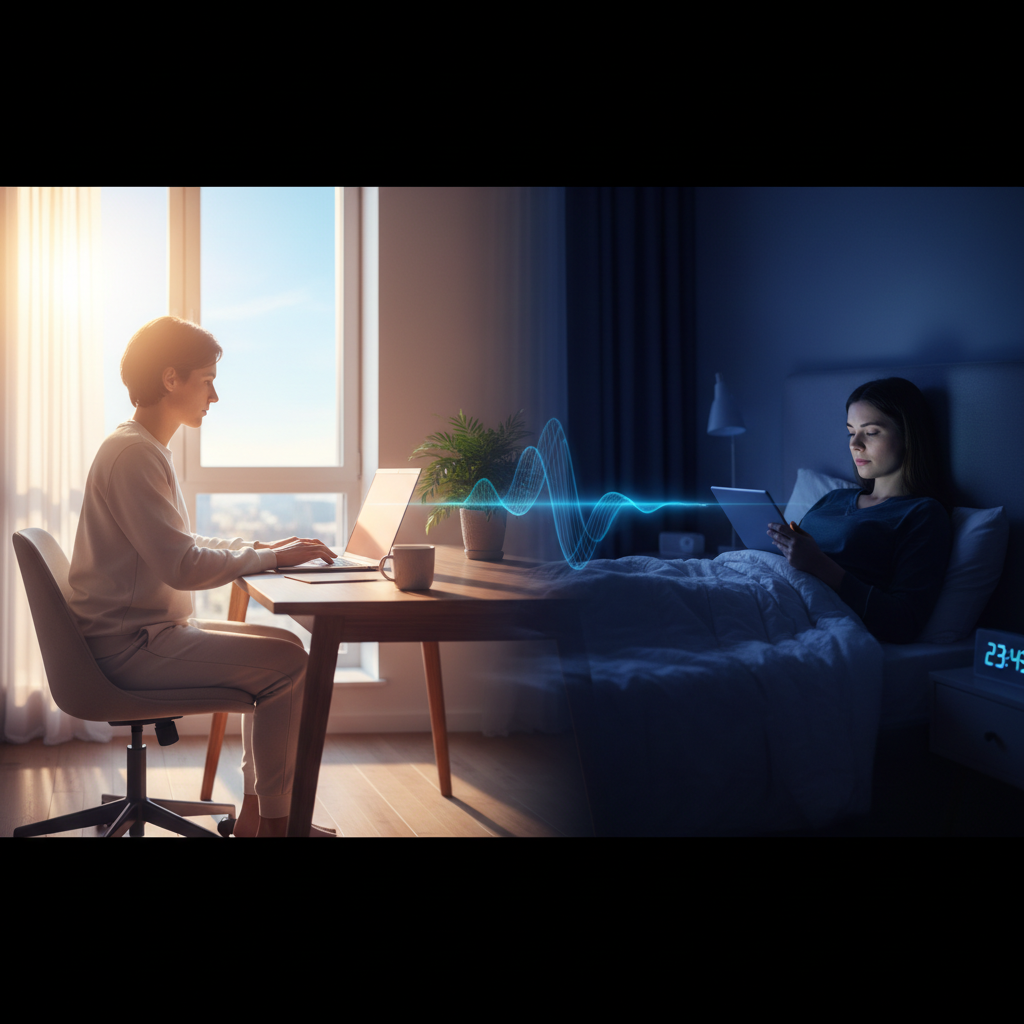
Modern life surrounds us with artificial light sources that fundamentally alter the biological signals our bodies have relied upon for millions of years. The timing of blue light exposure — whether from smartphones, computer screens, or LED bulbs — creates cascading effects throughout our internal clock system, influencing everything from morning alertness to nighttime sleep quality. Understanding these patterns reveals why the same device that energizes us during a morning video call can leave us restless when used before bedtime.
Morning Blue Light Acts as Nature's Coffee
Exposure to blue light wavelengths between 6 AM and 10 AM serves as one of the most powerful tools for synchronizing circadian rhythms. The human brain interprets this light as a signal that day has begun, triggering the suppression of melatonin production and the release of cortisol. This natural awakening process explains why many people feel more alert after checking their iPhone or opening laptop screens in the morning, even before consuming caffeine. The effect proves particularly beneficial for individuals working in offices with limited natural light, as devices like computer monitors can partially substitute for sunlight's energizing properties.
Afternoon Blue Light Maintains Peak Performance
During midday hours, blue light exposure helps sustain the alertness and cognitive function that naturally peaks in most adults. Research facilities and tech companies like Google and Microsoft have incorporated this understanding into their office lighting designs, using LED systems that emit higher concentrations of blue wavelengths during afternoon hours. The brain's suprachiasmatic nucleus — the master clock governing circadian rhythms — interprets continued blue light as confirmation that active, productive hours should continue. This biological response supports sustained focus and decision-making capabilities that typically decline without adequate light stimulation.
The Critical Evening Transition Period
The hours between 6 PM and 9 PM represent a crucial transition when the body begins preparing for sleep, yet many people maintain high levels of blue light exposure through continued screen use. During this window, the pineal gland starts ramping up melatonin production in response to diminishing natural light. However, artificial blue light from tablets, smartphones, and television screens can delay this process by several hours. The intensity matters significantly — even brief exposure to bright screens during this period can shift sleep onset later, regardless of how tired someone feels physically.
How Late-Night Screens Disrupt Sleep Architecture
Blue light exposure after 9 PM creates the most dramatic disruption to circadian rhythms, effectively convincing the brain that dawn is approaching when the body should be entering deeper sleep phases. This confusion doesn't just delay sleep onset; it alters the entire sleep cycle structure. Netflix viewing, social media scrolling, or late-night work emails reduce the amount of restorative deep sleep and REM sleep that occurs during the night. The effects compound over time, as shortened sleep duration further sensitizes the circadian system to evening light exposure, creating a cycle of increasingly disrupted sleep patterns.
Individual Variations and Chronotype Differences
Not everyone responds to blue light timing in identical ways, as genetic variations create natural early risers and night owls with different sensitivities. Morning chronotypes — people who naturally wake early and feel most alert in the morning — tend to experience stronger circadian disruption from evening blue light exposure. Night owls, whose internal clocks run slightly longer than 24 hours, may find that controlled morning blue light exposure helps them align better with conventional schedules. Age also influences sensitivity, with teenagers naturally experiencing delayed sleep phases that make evening blue light particularly disruptive to their already-shifted rhythms.
Practical Strategies for Optimizing Daily Light Exposure
You can harness blue light's circadian effects by timing exposure strategically throughout the day. Start mornings with bright screens or light therapy devices during the first hour after waking, especially during winter months with limited sunlight. During afternoon work sessions, position yourself near windows when possible or use desk lamps with daylight-balanced LED bulbs to maintain alertness. As evening approaches, gradually reduce blue light exposure by using devices with night mode settings, which filter blue wavelengths and shift displays toward warmer, red-orange tones. Consider blue light blocking glasses for unavoidable evening screen time, though complete avoidance of screens during the two hours before intended bedtime produces the most reliable results.
The growing awareness of blue light's circadian effects is driving innovations in both consumer technology and lighting design. Smart home systems now automatically adjust color temperatures throughout the day, while smartphone manufacturers continue refining night mode algorithms. As our understanding deepens, expect to see more personalized approaches that consider individual chronotypes and seasonal variations, making it easier to live in harmony with both modern technology and ancient biological rhythms.