How Blue Light Exposure at Different Times of Day Affects Your Circadian Rhythm and Energy Levels
Robert Kim
03/02/2026
3 min read
The human circadian system evolved over millennia to respond to natural light patterns, yet modern society bathes people in artificial blue light at times when biology expects darkness. This disruption affects far more than sleep quality — it fundamentally alters energy production, hormone regulation, and cognitive performance throughout the day.
Understanding how blue light exposure varies in impact based on timing reveals why morning screen time energizes while evening scrolling depletes. The key lies in recognizing that circadian rhythms operate as a sophisticated internal clock that requires specific light cues to maintain optimal function.
Morning Blue Light Enhances Alertness and Mood
Blue light exposure during the first few hours after waking provides powerful benefits for circadian health. Morning sunlight naturally contains high levels of blue wavelengths, signaling the brain's suprachiasmatic nucleus to suppress melatonin production and increase cortisol release. This hormonal shift creates the alert, energized state associated with healthy mornings.
Devices like Apple's iPhone and Samsung Galaxy phones emit concentrated blue light that can supplement natural morning exposure, particularly during darker winter months. The key difference lies in timing — morning blue light exposure reinforces natural circadian patterns rather than disrupting them.
Midday Exposure Maintains Energy Without Major Disruption
Blue light exposure during midday hours typically causes minimal circadian disruption because the body's internal clock expects bright light during peak daylight. This period represents the most forgiving window for screen-based work and device usage.
Office workers spending hours in front of Dell monitors or MacBook screens during traditional work hours rarely experience significant circadian interference. The body's natural alertness peaks during these hours regardless of artificial light exposure. However, individuals who work in windowless environments may benefit from bright light therapy devices like those manufactured by Verilux to maintain optimal energy levels throughout the afternoon.
Evening Blue Light Disrupts Sleep Preparation
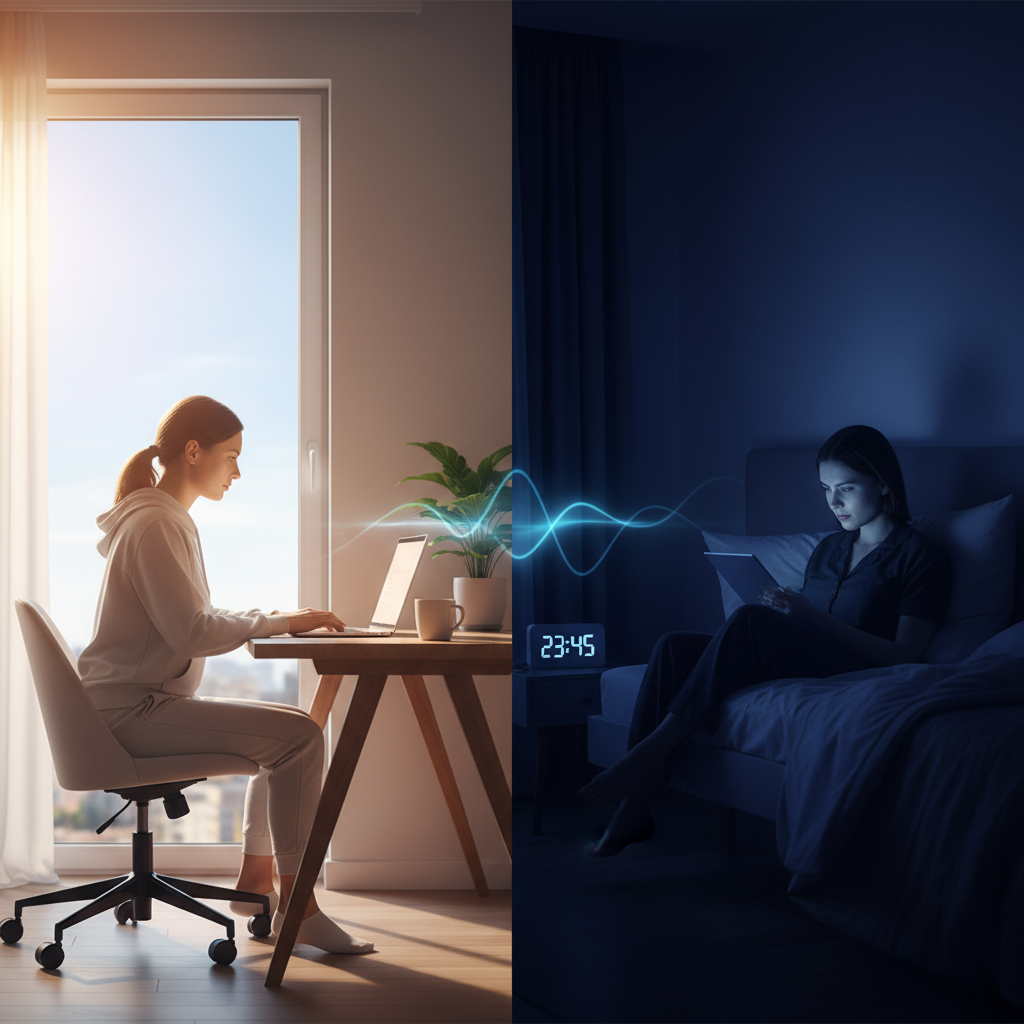
The most problematic timing for blue light exposure occurs during the two to three hours before intended bedtime. During this critical window, the pineal gland naturally begins increasing melatonin production in response to diminishing light levels. Blue light exposure during this period essentially tricks the brain into believing it's still daytime.
This disruption doesn't just delay sleep onset — it fundamentally alters sleep architecture and reduces sleep quality. The cascade effect impacts next-day energy levels, cognitive performance, and mood regulation. Netflix binges, Instagram scrolling, and late-night work sessions create a cycle where artificial light exposure perpetually shifts the circadian clock forward.
Individual Variations in Light Sensitivity
Not everyone responds identically to blue light exposure patterns. Genetic variations in circadian clock genes influence whether someone naturally tends toward earlier or later sleep-wake cycles. Natural early risers typically show greater sensitivity to evening blue light disruption, while night owls may tolerate later screen exposure with less dramatic effects.
Age also plays a significant role in blue light sensitivity. Younger individuals generally produce higher baseline melatonin levels and may recover more quickly from circadian disruptions. Older adults often experience more pronounced and lasting effects from mistimed light exposure, requiring greater attention to evening screen habits.
Creating Practical Blue Light Management Strategies
You can optimize your circadian rhythm through strategic timing of blue light exposure rather than complete avoidance. Start by maximizing natural sunlight exposure within the first hour of waking, even on cloudy days. This establishes a strong circadian anchor point that makes the system more resilient to later disruptions.
Implement blue light filtering during evening hours through device settings like Night Shift on Apple products or blue light filters on Android phones. Amber-tinted glasses provide another effective barrier when avoiding screens entirely isn't practical. Consider replacing bedroom overhead lights with warm-toned LED bulbs that emit minimal blue wavelengths.
Time your most screen-intensive activities for midday hours when possible, reserving evenings for activities that don't require bright displays.
The future of circadian health likely involves more sophisticated light management technology, including smart home systems that automatically adjust lighting throughout the day and wearable devices that provide personalized light exposure recommendations. As understanding of individual circadian variations improves, people will gain access to increasingly precise tools for optimizing their light environment to support natural energy patterns.